

Hornwing Snowstalker
Broad feathered wings, cliff nests, silent glides, and drop attacks. The observed six-to-eight-metre wingspan is approximate and does not give wings to any established Stormspine feline.
Hornwing Snowstalker inhabits winterwall cliffs and white expanse edges. Its field temperament is aloof ambush hunter, with high caution. Broad feathered wings, cliff nests, silent glides, and drop attacks. The observed six-to-eight-metre wingspan is approximate and does not give wings to any established Stormspine feline.
Wild or unbound members of this lineage are lethally hostile to people on meaningful detection. Established bonded, domesticated, Companioner-trained or canonically socialized individuals are exceptions. Ecology and intelligence do not erase the wild baseline.
Tracking Info
Cliff ledges show talon scrapes and large feather traces. Snow below common launch points contains elongated landing furrows. Kills may show impact trauma before bite wounds.
Deeper Ethology
Snowstalkers hunt from height using silent glide-and-drop attacks. They avoid prolonged ground pursuit. Pairs may share nesting cliffs while maintaining separate hunting circuits. Strong crosswinds alter hunting direction, and experienced animals wait for favorable air. Nest defense produces the shortest escalation ladder of the species. Wild, unbound Mana Beasts are lethally hostile to people upon meaningful detection. Ambush, flanking, pursuit and attack timing follow the species’ established senses and tactics. Early warning and staying beyond detection can prevent contact; once detected, survival requires force, earned deterrence, specialized established abilities or escape. Ordinary distraction or handling does not make the creature safe.
When This Is Wrong
A break from these patterns is a reason to investigate. Injury, hunger, breeding, severe weather, migration, displacement, disease, mana instability or learned responses to people can change behavior. Observe the context before deciding what the sign means.
Connected world
Follow the relationships
Each connection opens the matching canonical record or a focused Codex search when that subject does not yet have its own public record.
 Stormspine subregion
Frost March
The inhabited northern Stormspine, where wooded valleys rise through defended passes and moving glaciers toward the unresolved remains of the Buried Crown.
Open record →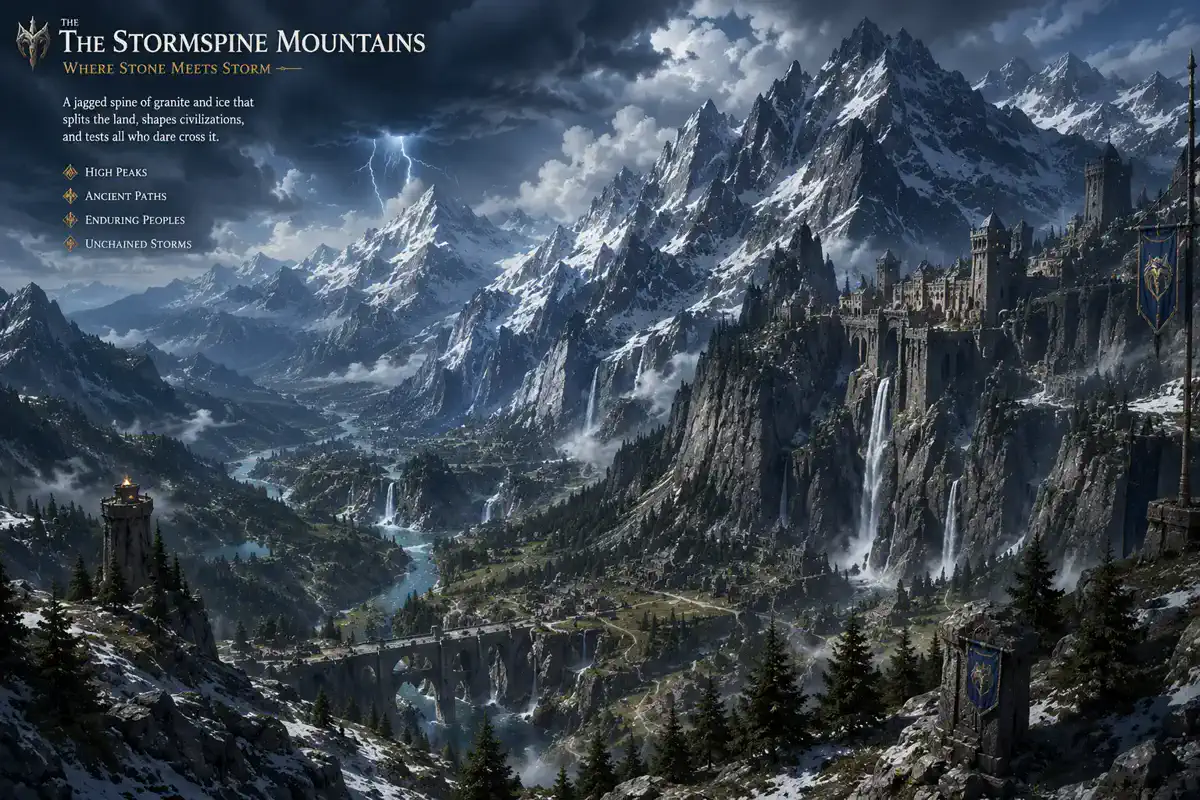 Region
Stormspine
A severe mountain range of high roads, old powers, dragons, dangerous weather, and the inhabited Frost March in its far north.
Open record →Mana Beast · Natural-magical winged predatorHornwing Snowstalker
Broad feathered wings, cliff nests, silent glides, and drop attacks. The observed six-to-eight-metre wingspan is approximate and does not give wings to any established Stormspine feline.
Open record →