
Official canon search
The Aruhlian Codex
Search by name or question, then follow connected people, places, creatures, institutions, stories, and artifacts through stable canonical records.
86 approved public records
Matching canonical records
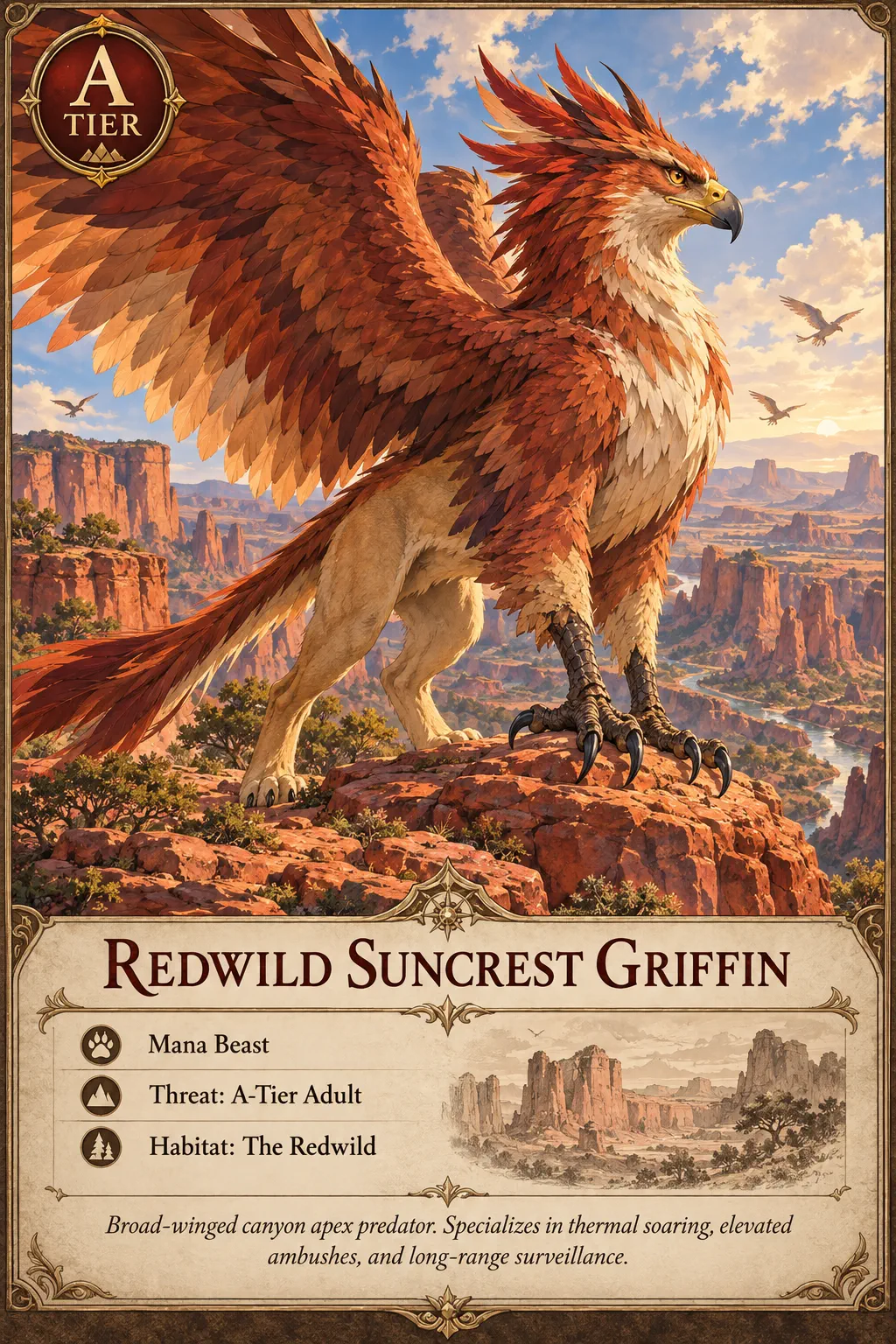
A A-class regional griffin lineage of The Redwild. This intelligent, non-speaking apex predator is not automatically hostile.
A seven-lineage family of intelligent, non-speaking Mana Beast apex predators, connected across regional ecology without pretending that every flight is hostile or mapped.
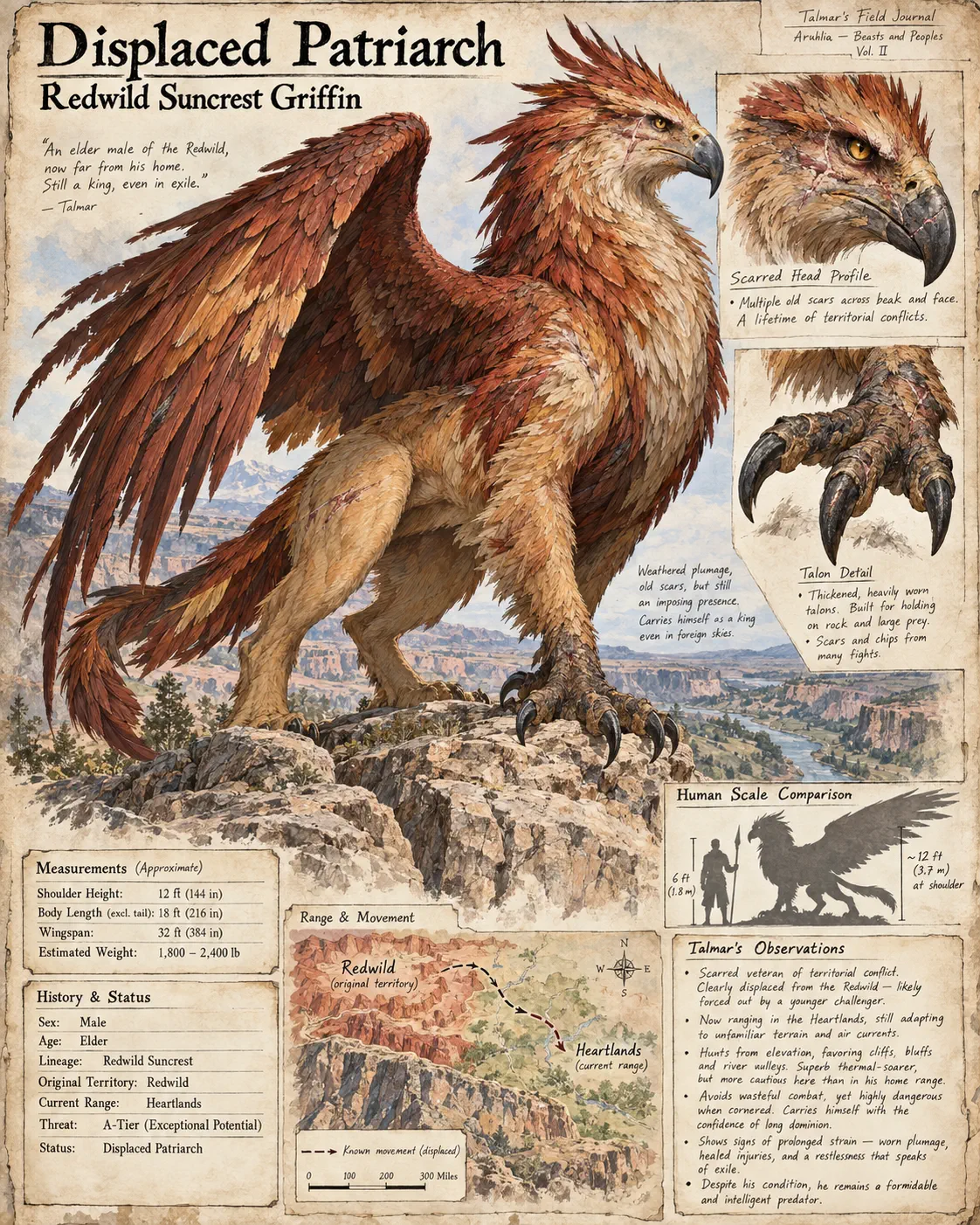
An unnamed elder male Redwild Suncrest Griffin displaced into the Heartlands, with an unestablished territory and a provisional exceptional A-class threat.
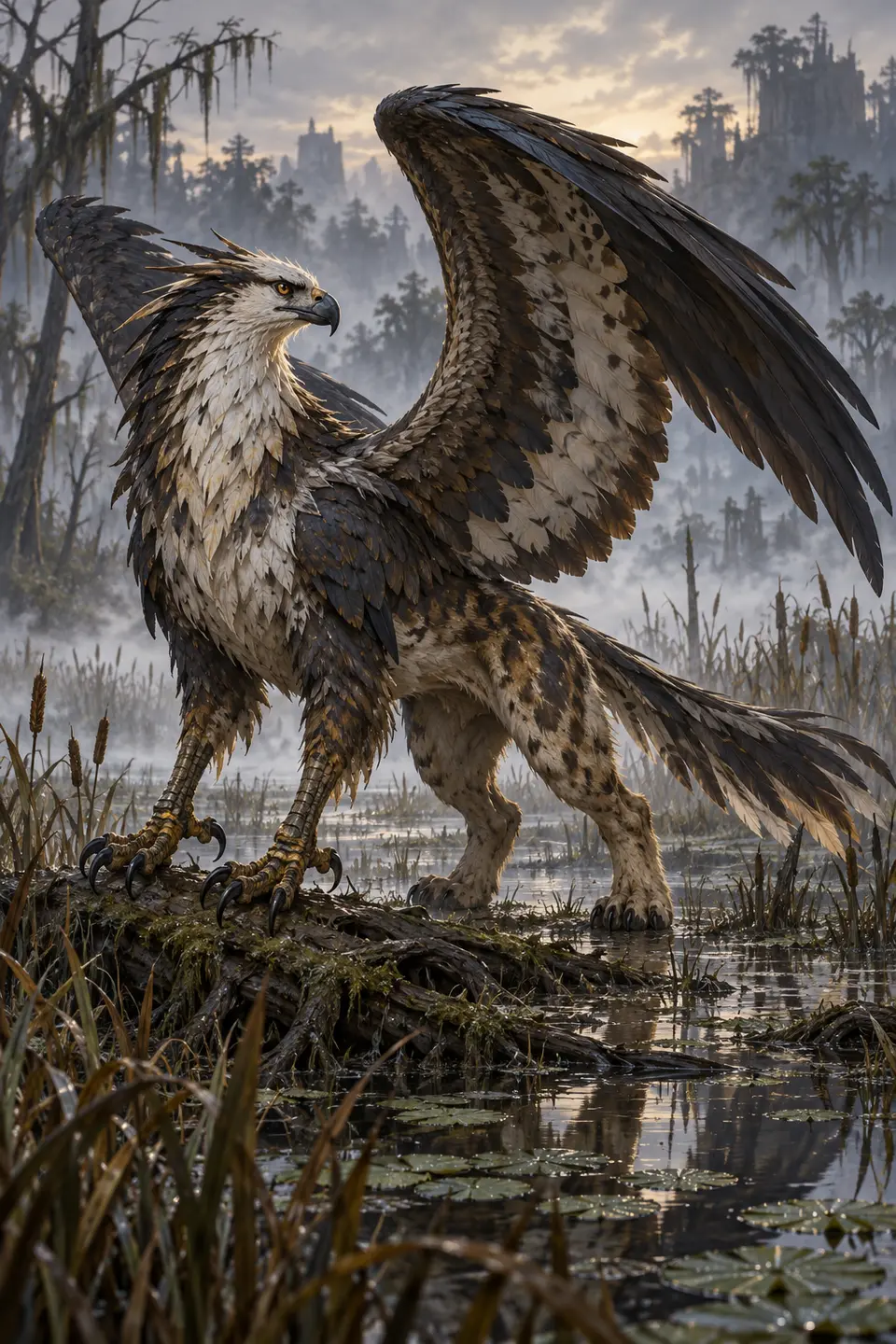
A B-class regional griffin lineage of Blackfen Marsh. This intelligent, non-speaking apex predator is not automatically hostile.
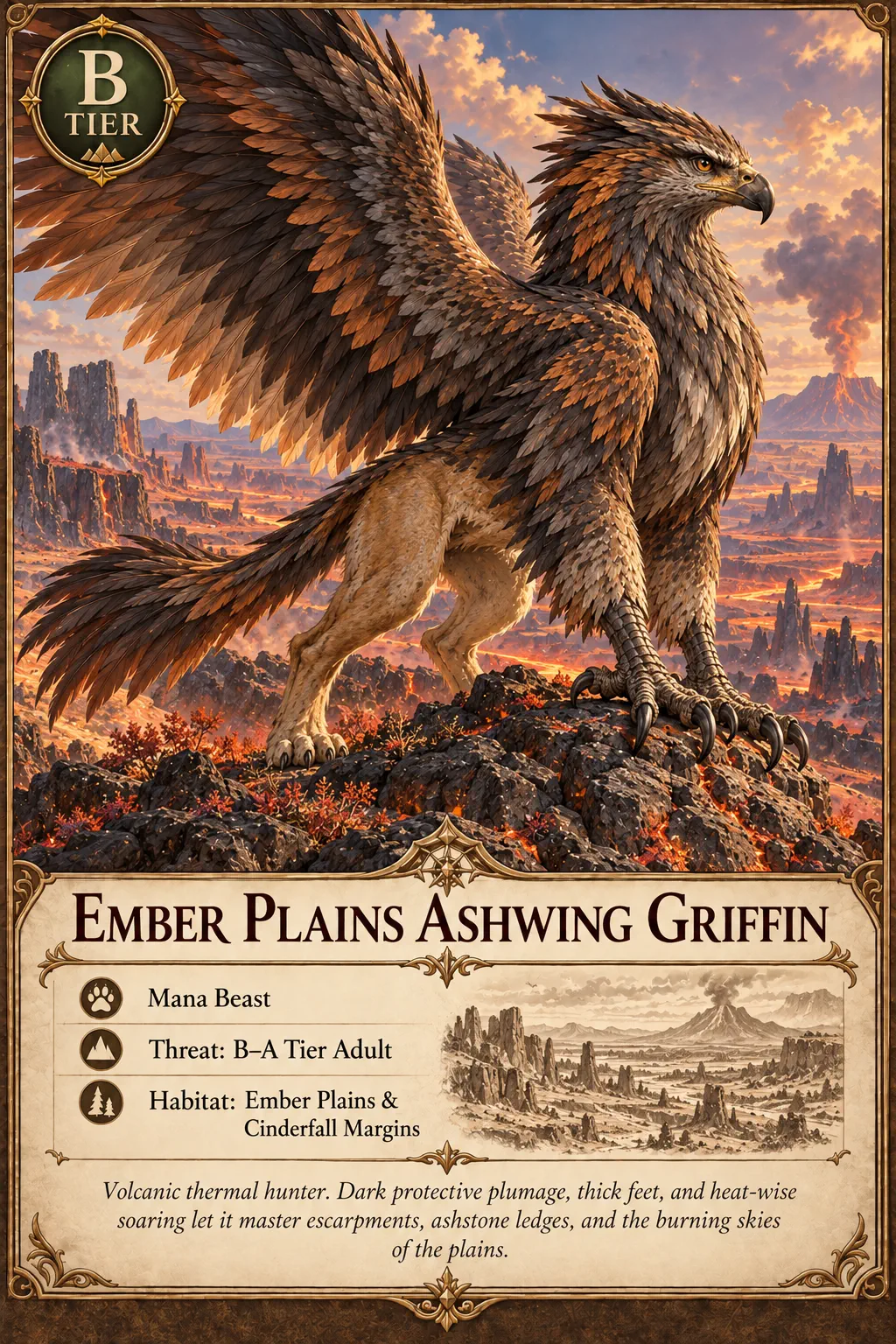
A B–A-class regional griffin lineage of Ember Plains. This intelligent, non-speaking apex predator is not automatically hostile.
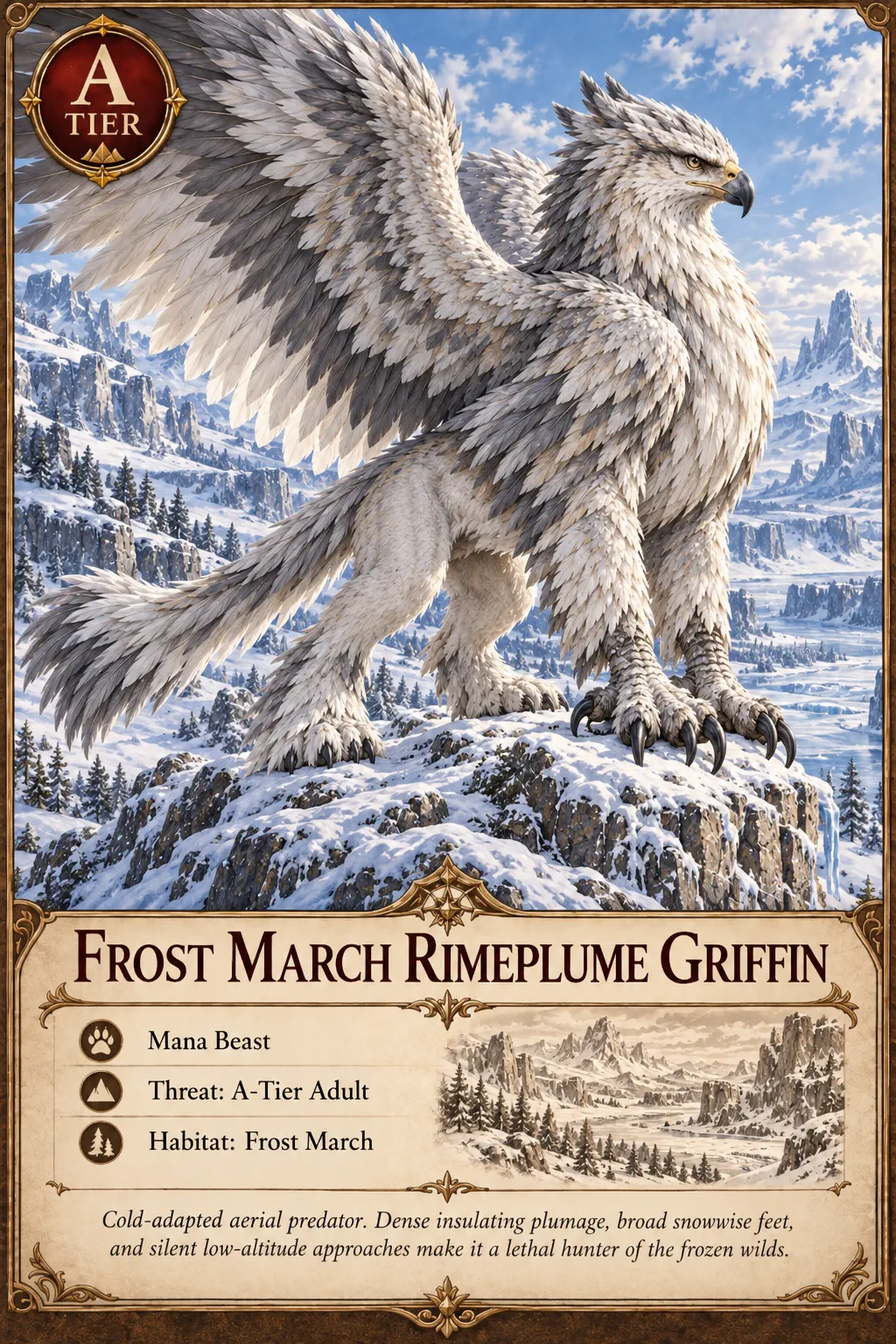
A A-class regional griffin lineage of Frost March. This intelligent, non-speaking apex predator is not automatically hostile.
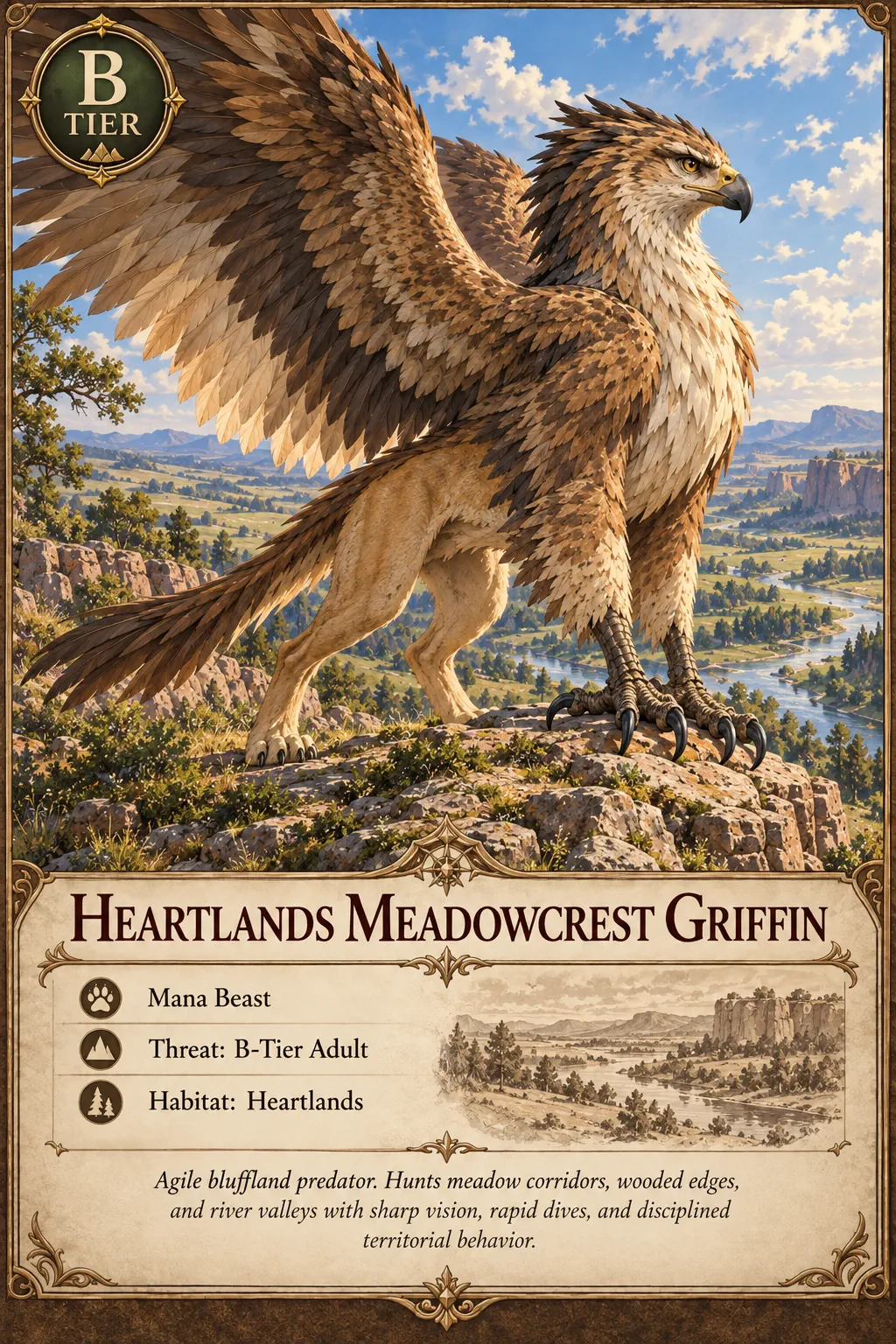
A B-class regional griffin lineage of The Heartlands. This intelligent, non-speaking apex predator is not automatically hostile.
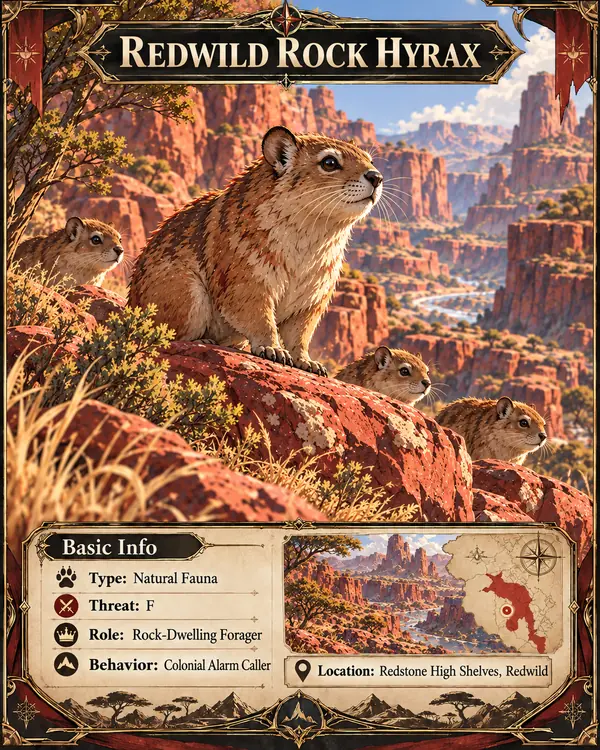
Natural Fauna of Redstone High Shelves. Alarm callers; live in rock colonies and shelter crevices.
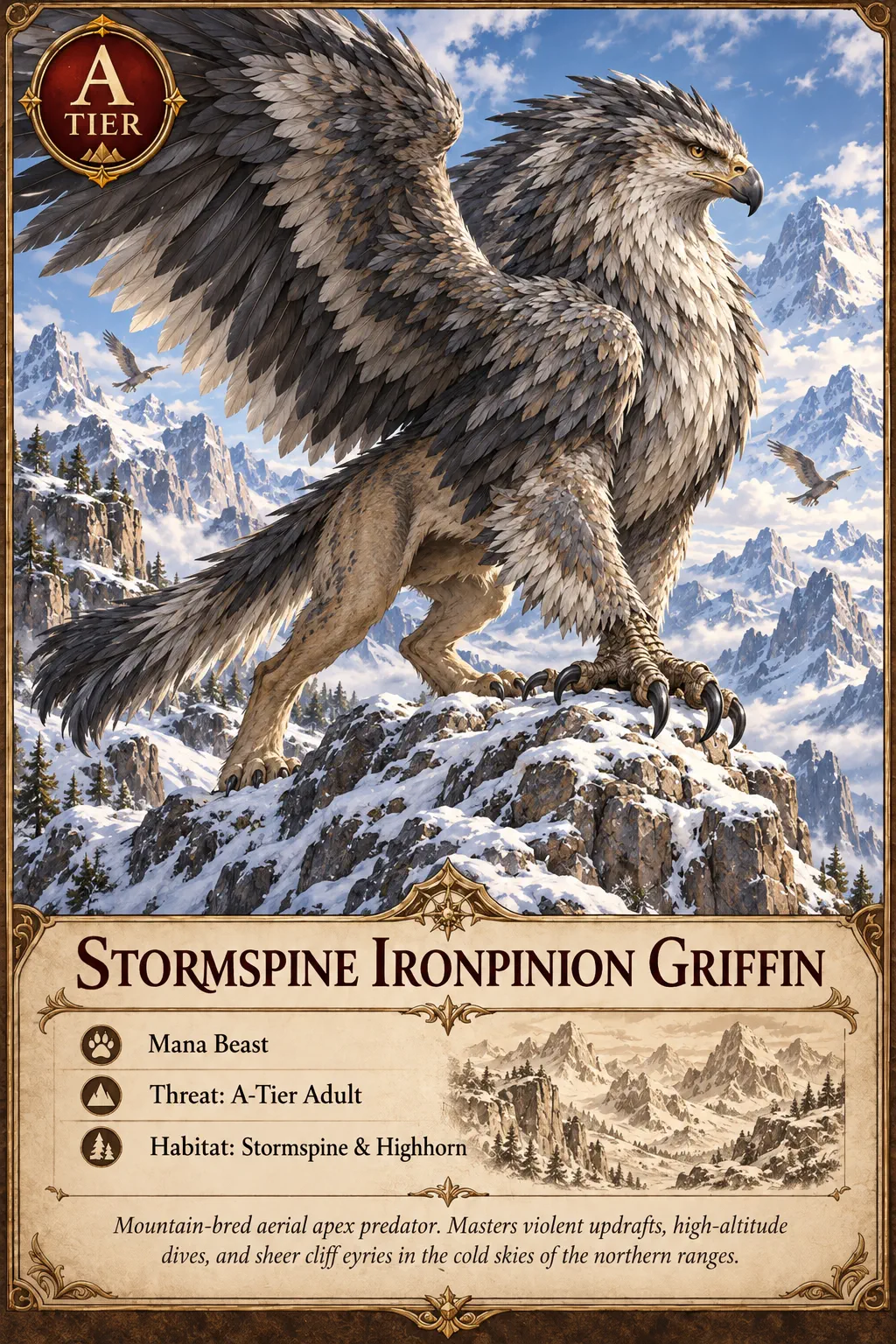
A A-class regional griffin lineage of Stormspine. This intelligent, non-speaking apex predator is not automatically hostile.
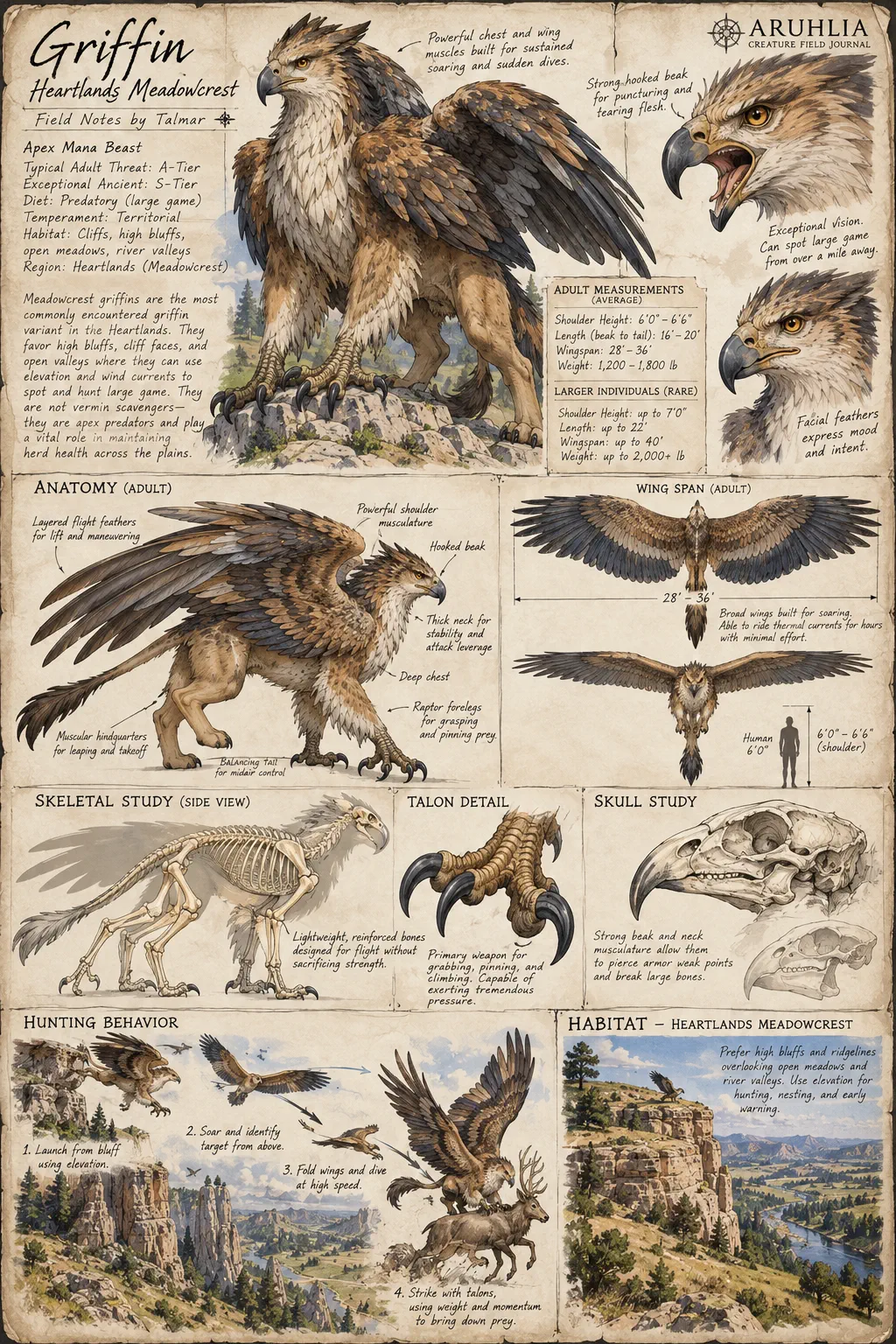
Talmar's observational griffin studies accompany the standard bestiary cards without replacing structured canon or inventing an encounter outcome.
Concordia supporters argue that a major sponsor's publicity gives Captain Maelis Crownspear more attention than the rest of the Griffins.

A vast redstone land of canyon springs, long routes, broken escarpments, and distant communities.
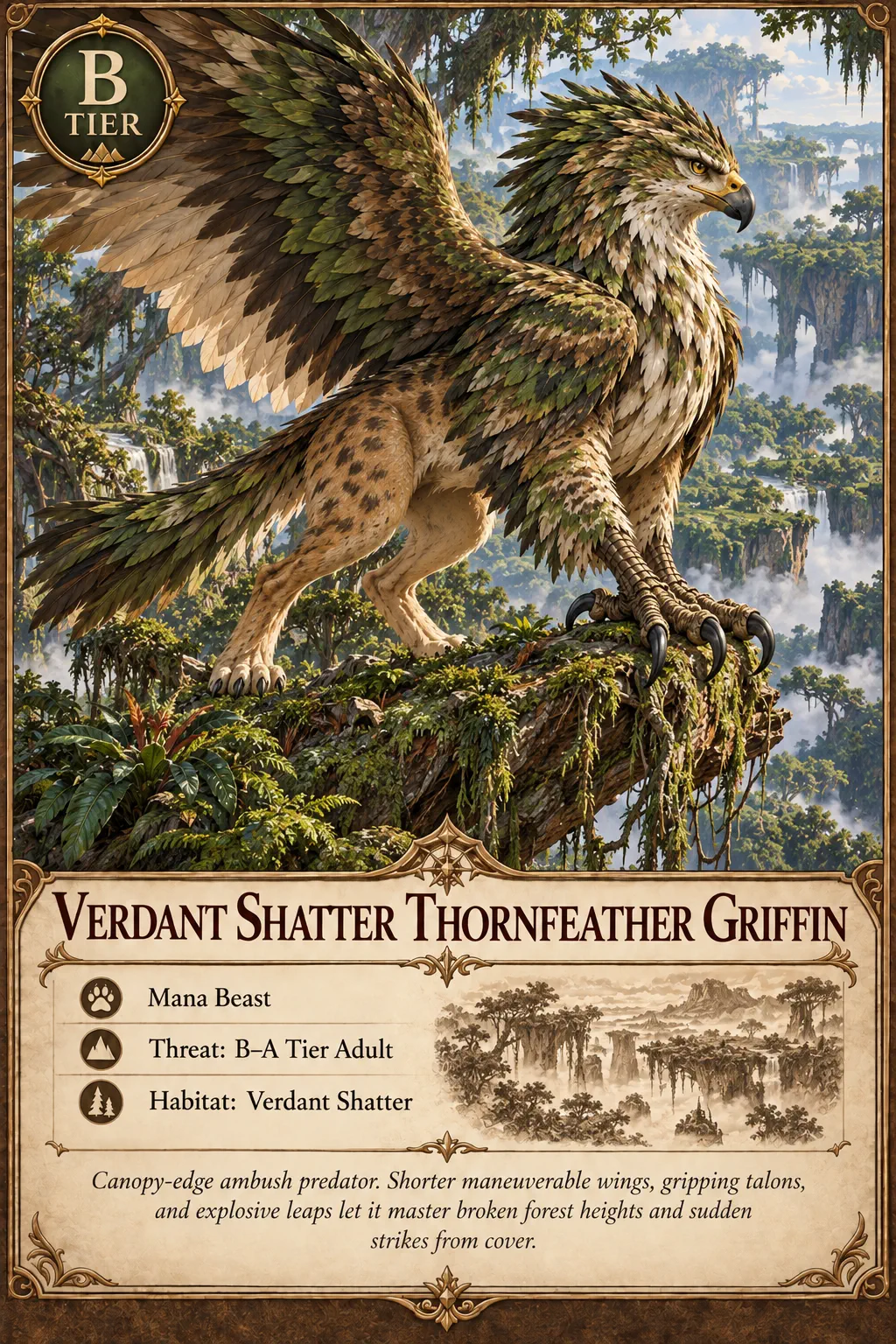
A B–A-class regional griffin lineage of Verdant Shatter. This intelligent, non-speaking apex predator is not automatically hostile.
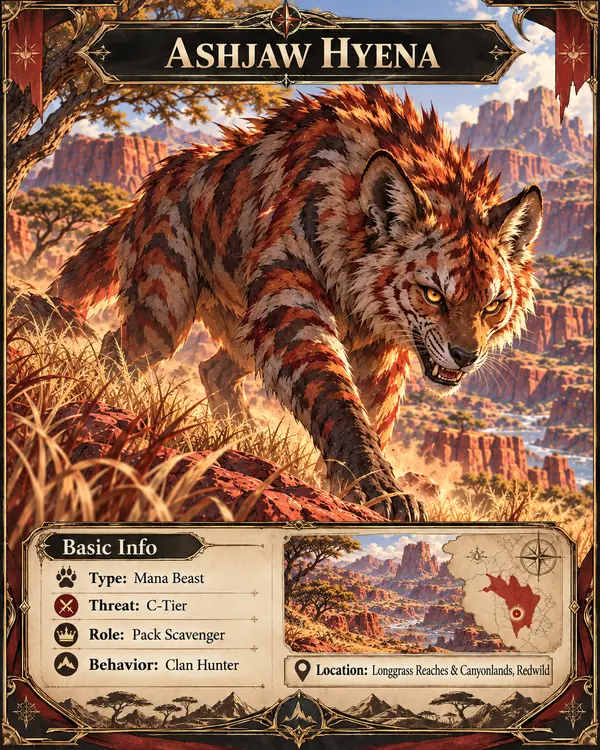
Mana Beast of Longgrass Reaches; Canyonlands. Clan structure; briefly heats jaws; carcass processing and hunting.
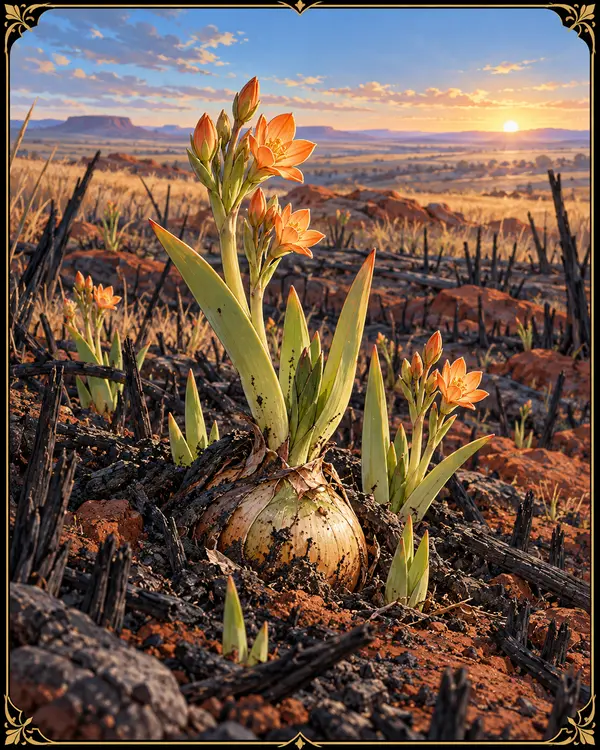
Flora of Longgrass Reaches. Fire-adapted perennial bulb; resprouts after burns, feeds early grazers.
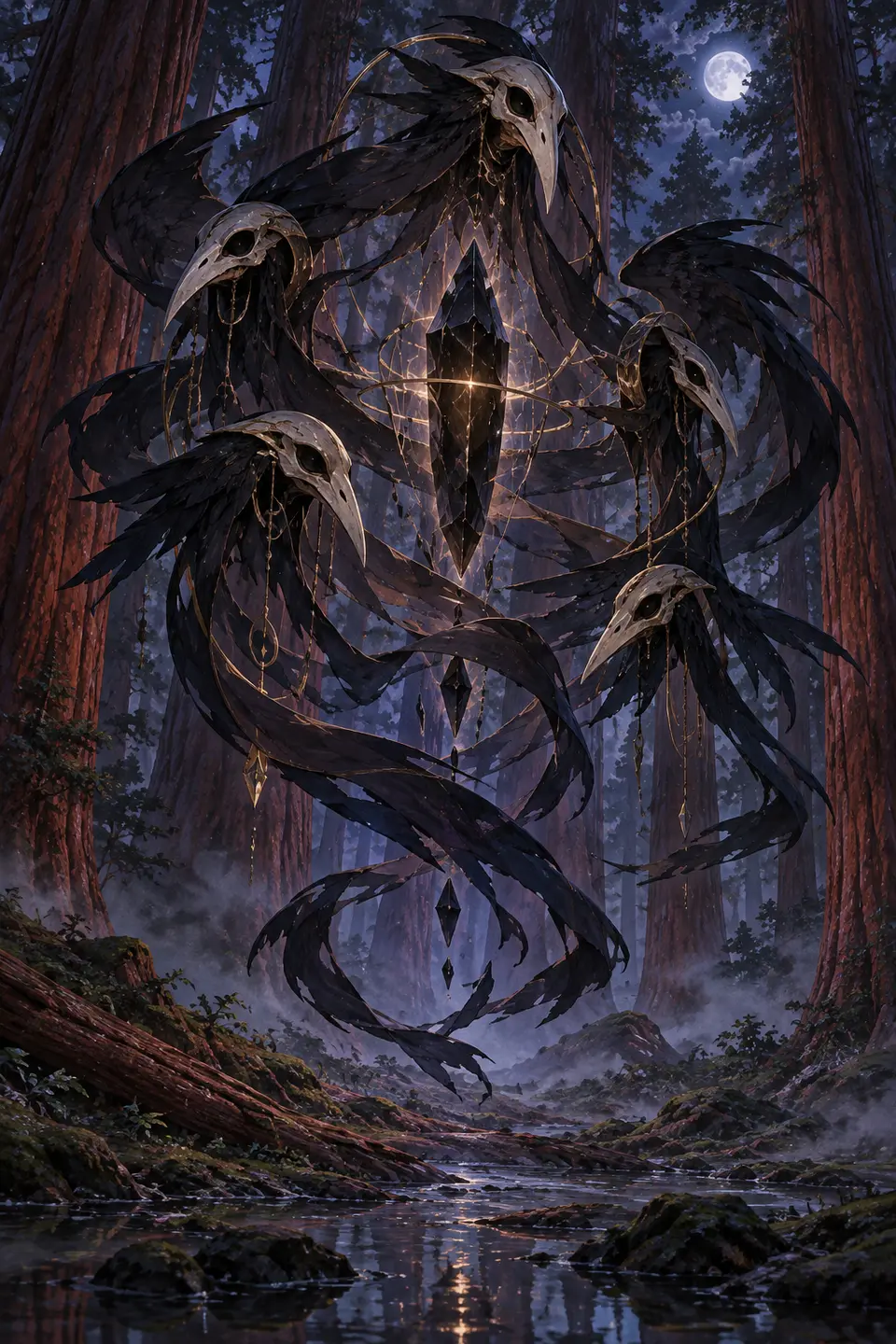
A Redwild dungeon-origin Resonance-family monster under the current classification system.
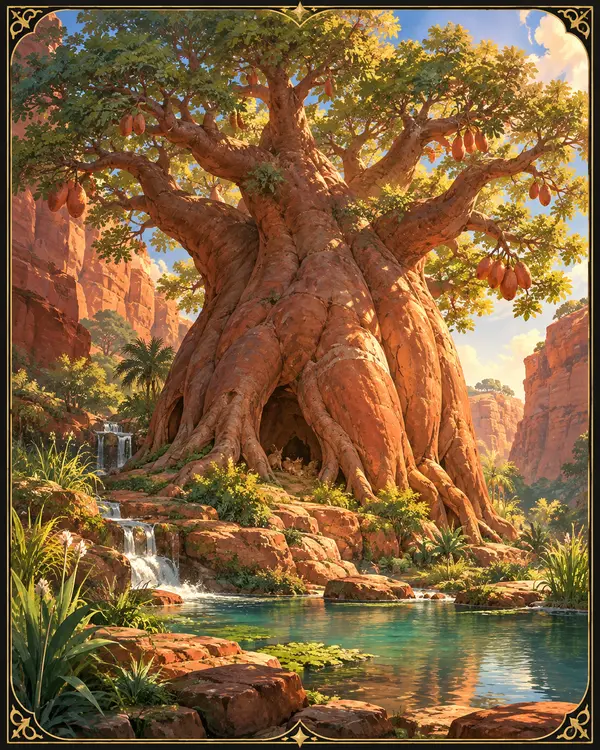
Flora of Springholds; Thornbreak Woodlands. Huge water-storing tree; hollows host small animals and travelers; fruit edible after preparation; keystone dry-season resource.
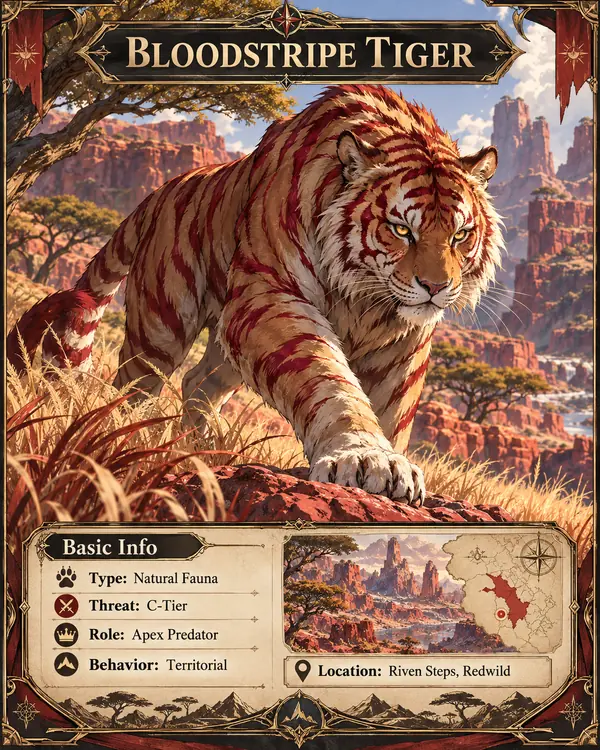
Natural Fauna of Riven Steps. Territorial apex predator; mothers protect cubs; avoid needless confrontation.
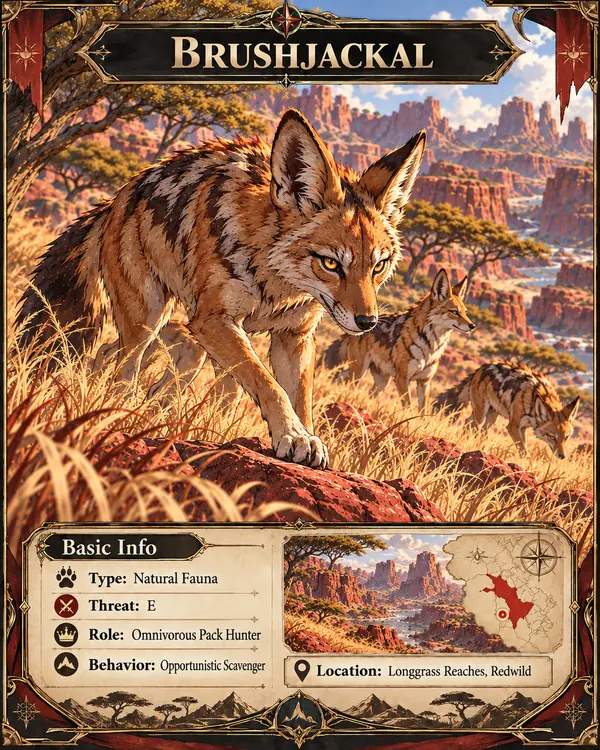
Natural Fauna of Longgrass Reaches; Canyonlands. Small coordinated foraging packs; tracks herd migrations and scavenges.
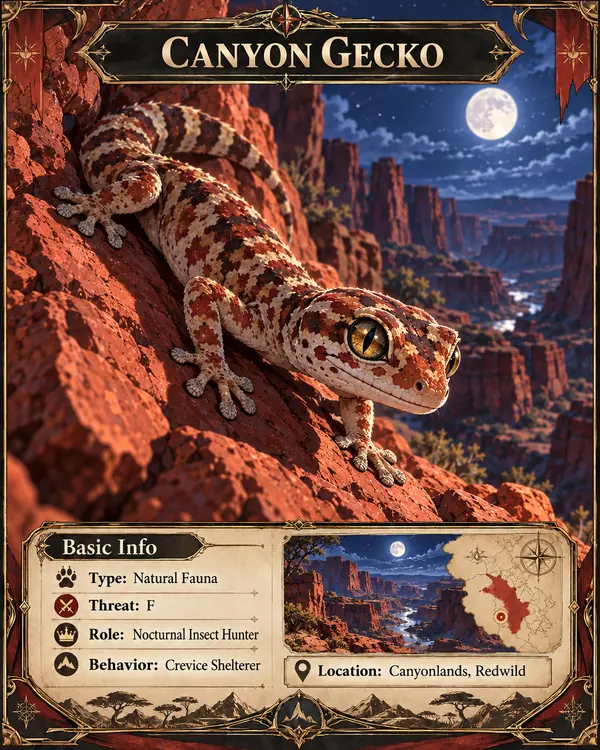
Natural Fauna of Riven Steps; Canyonlands. Shelters in crevices and hunts insects at night.
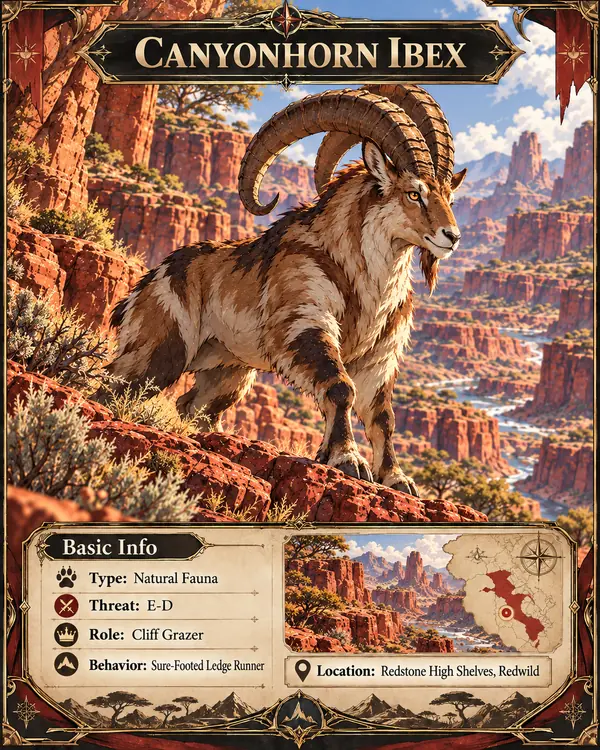
Natural Fauna of Redstone High Shelves. Steep-ledge footing; breeds in inaccessible shelves.
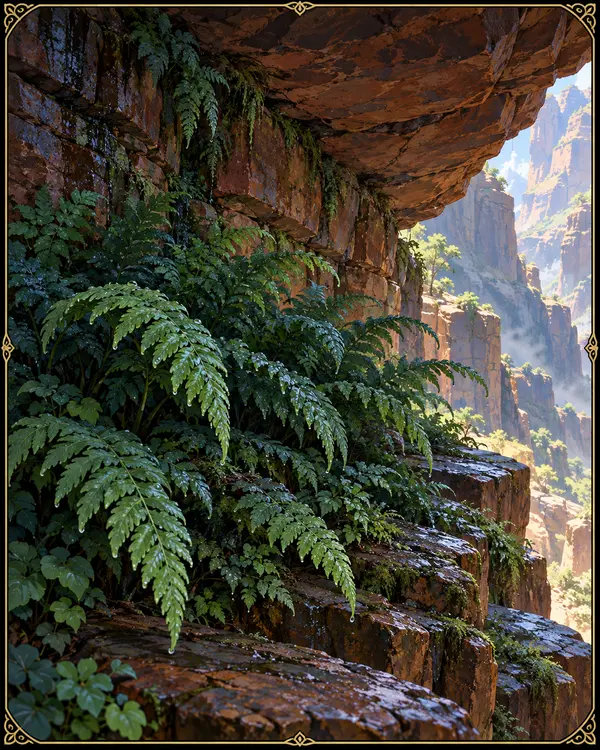
Flora of Springholds; Riven Steps. Moisture-loving groundcover; signals shade/dampness rather than potable water.
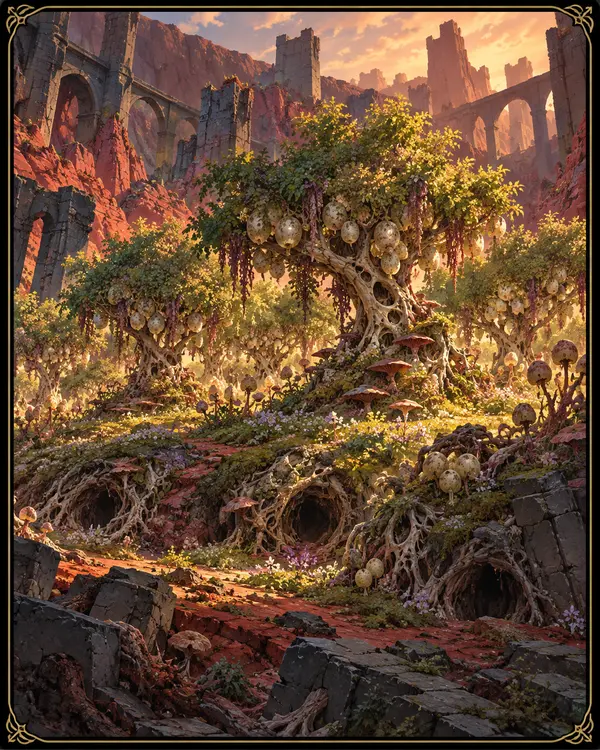
Dungeon Monster of Hollow Scars. Stationary deceptive vegetated feeding-colony complex; not ordinary flora.
terrace town in Redwild: smiths, ceramic water jars, shade markets and harness repair.
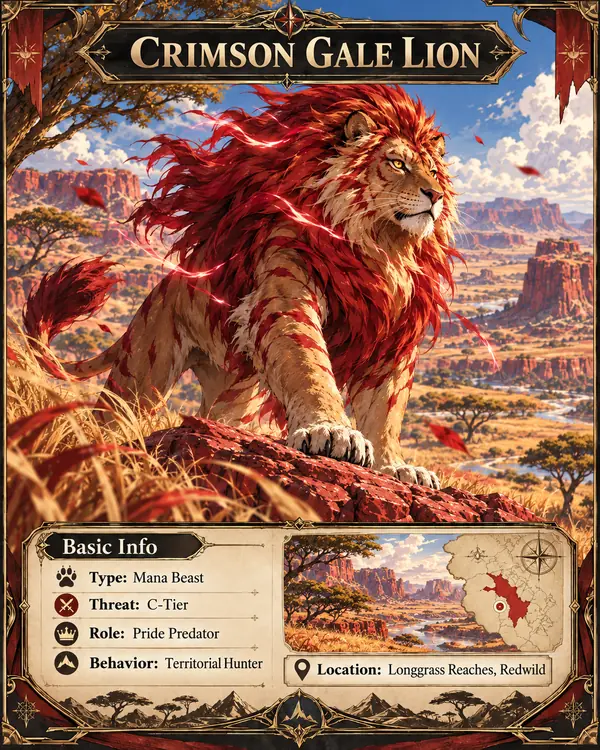
Mana Beast of Longgrass Reaches. Territorial prides; wind-assisted leaps and short bursts, not flight.
An escarpment community guarding important crossings, known for shieldmakers, hunters, escorts, and caravan guards who are more willing than most Felionus to stand and hold ground.
roadside station in Redwild: water rationing, stable shelter, route warnings and runners.
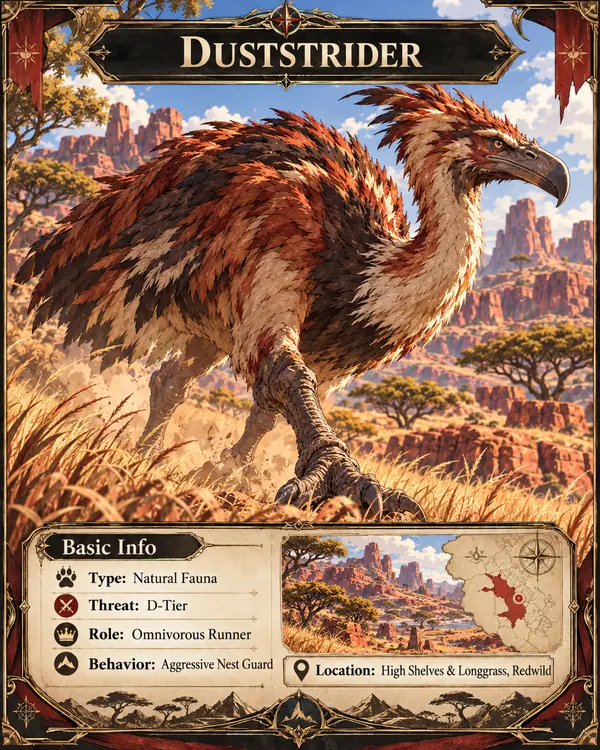
Natural Fauna of Longgrass Reaches; Redstone High Shelves. Nest defense; kick attacks; feeds on seeds, insects, small animals.
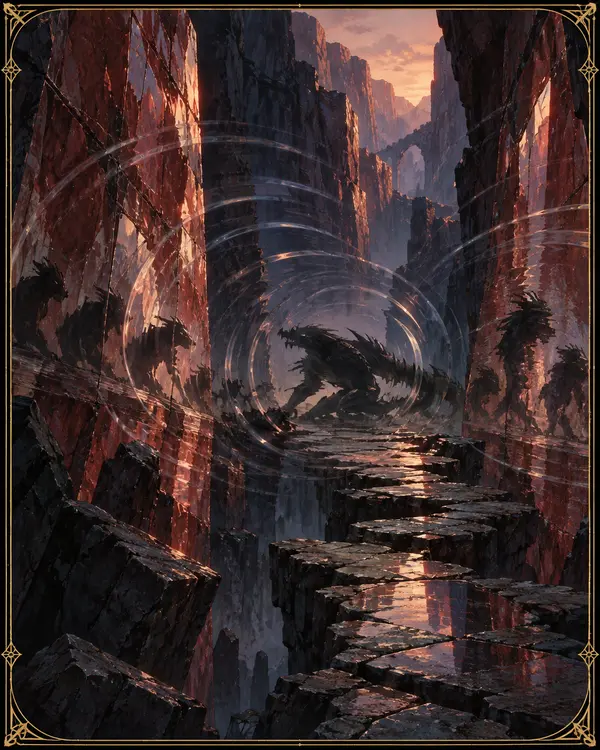
Dungeon Monster of Riven Steps; Hollow Scars. Reflected sound and disruptive pulses confuse prey in canyon confines.
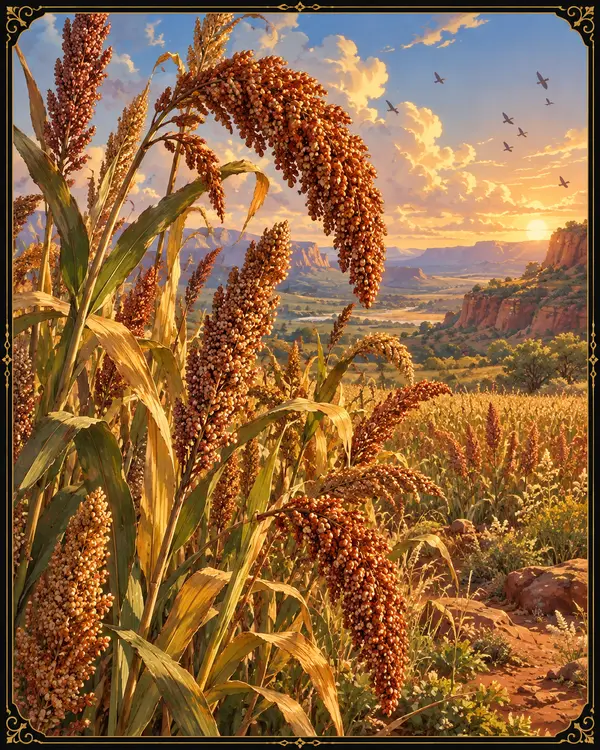
Flora of Longgrass Reaches. Drought-tolerant edible grain supporting birds and people.
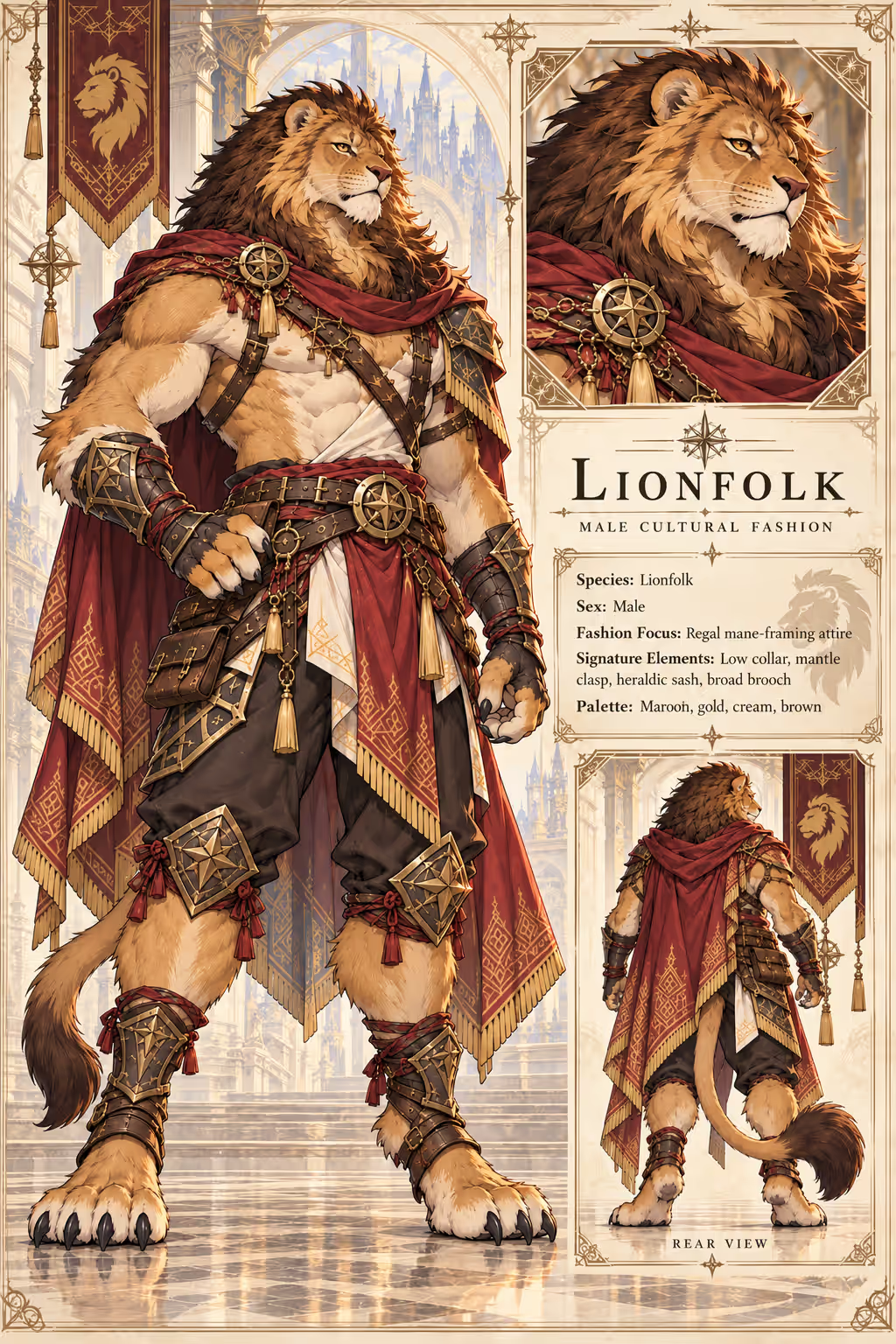
The people of the long path: a rare Redwild route civilization shaped by movement, memory and return.
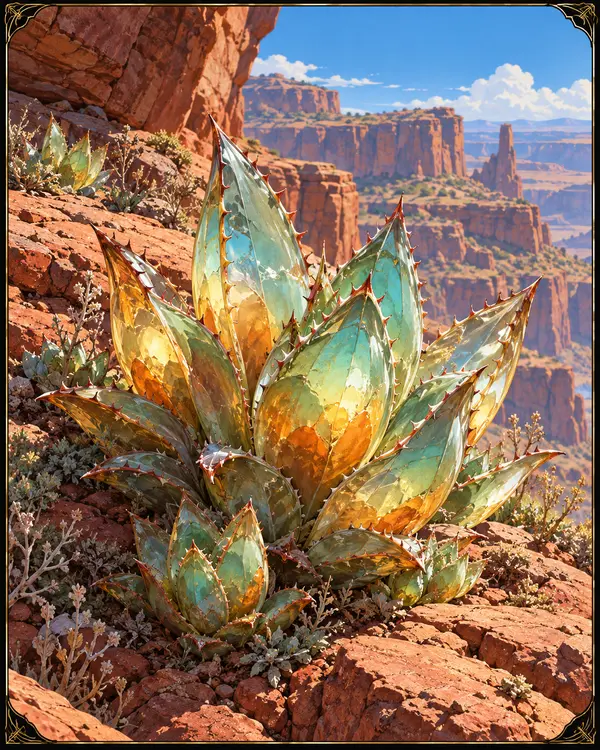
Flora of Redstone High Shelves. Mineralized translucent leaves that store water; difficult to harvest safely.
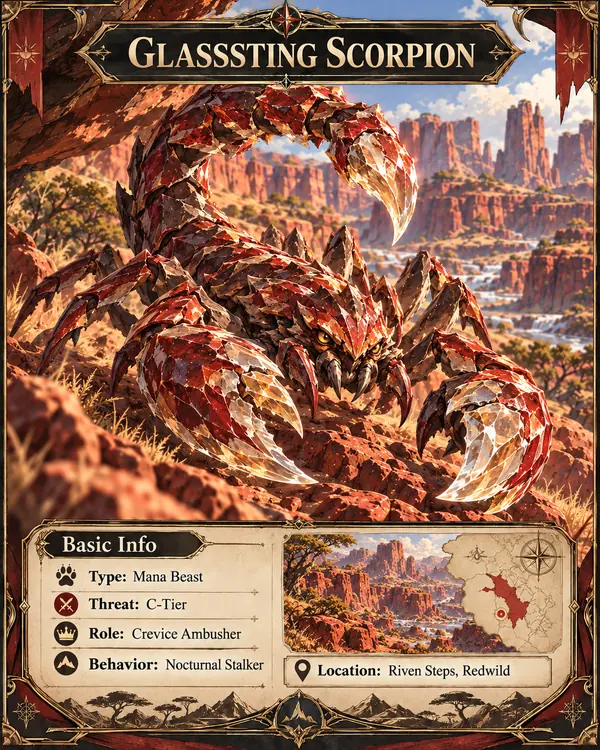
Mana Beast of Riven Steps. Vibration sensing; mana-hardened sting; favors narrow spaces.
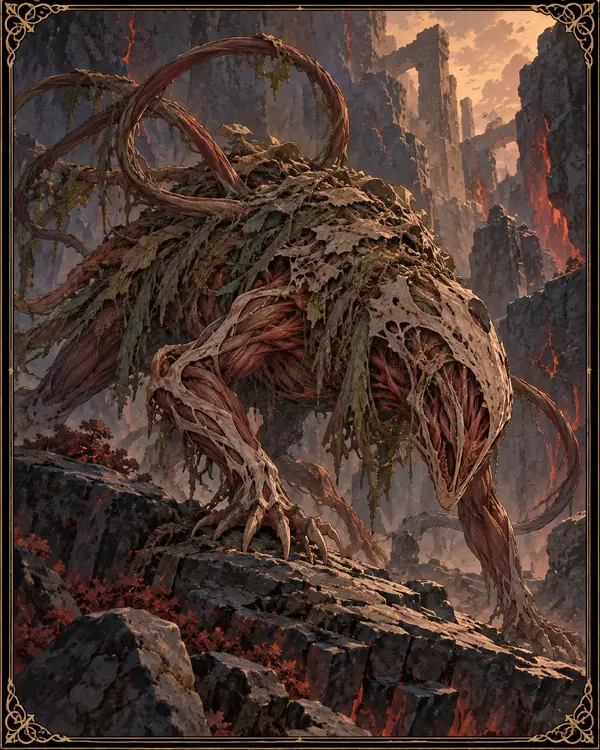
Dungeon Monster of Hollow Scars. Tendril-bearing beast; uses organic remains as protective tissue.
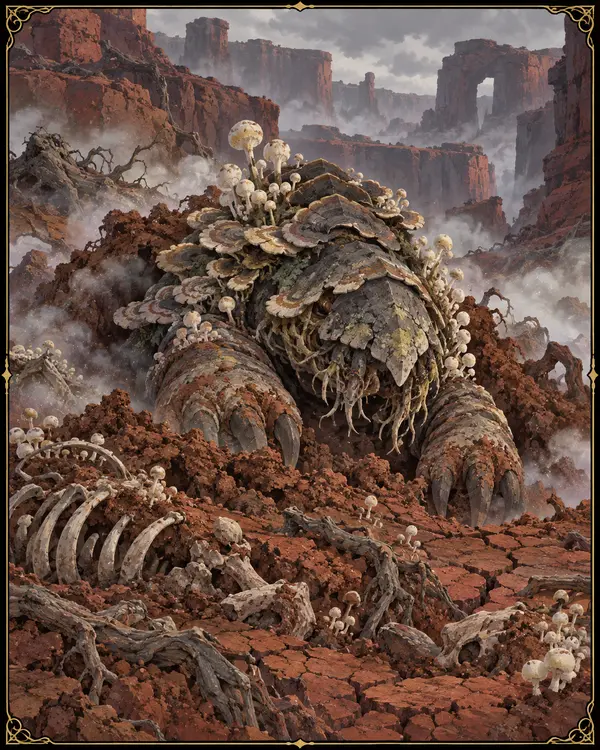
Dungeon Monster of Hollow Scars; disturbed canyonlands. Subterranean colony feeder; spores gather around buried carrion.
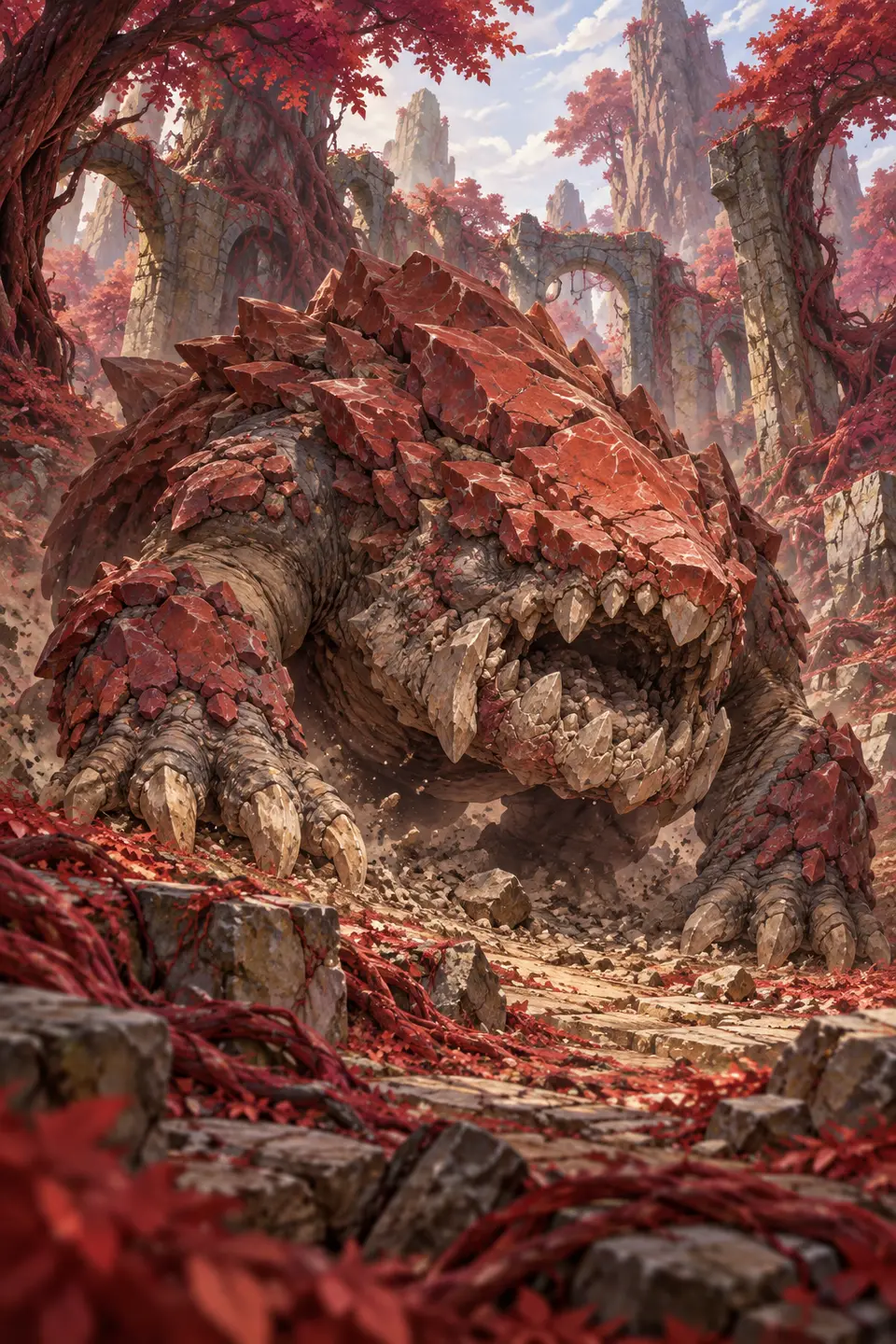
A Redwild dungeon-origin Flesh-family monster under the current classification system.
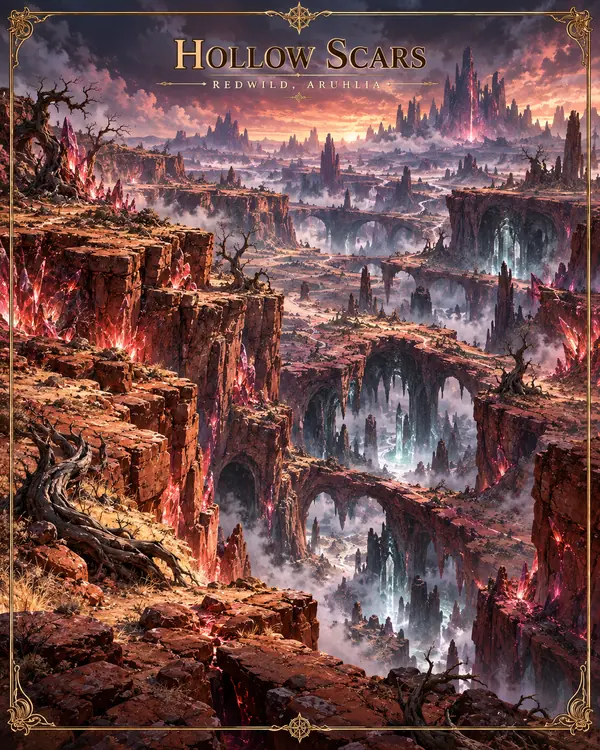
Localized mana-disturbed ravines and dungeon-linked landscapes; natural animal use possible outside active breach areas.
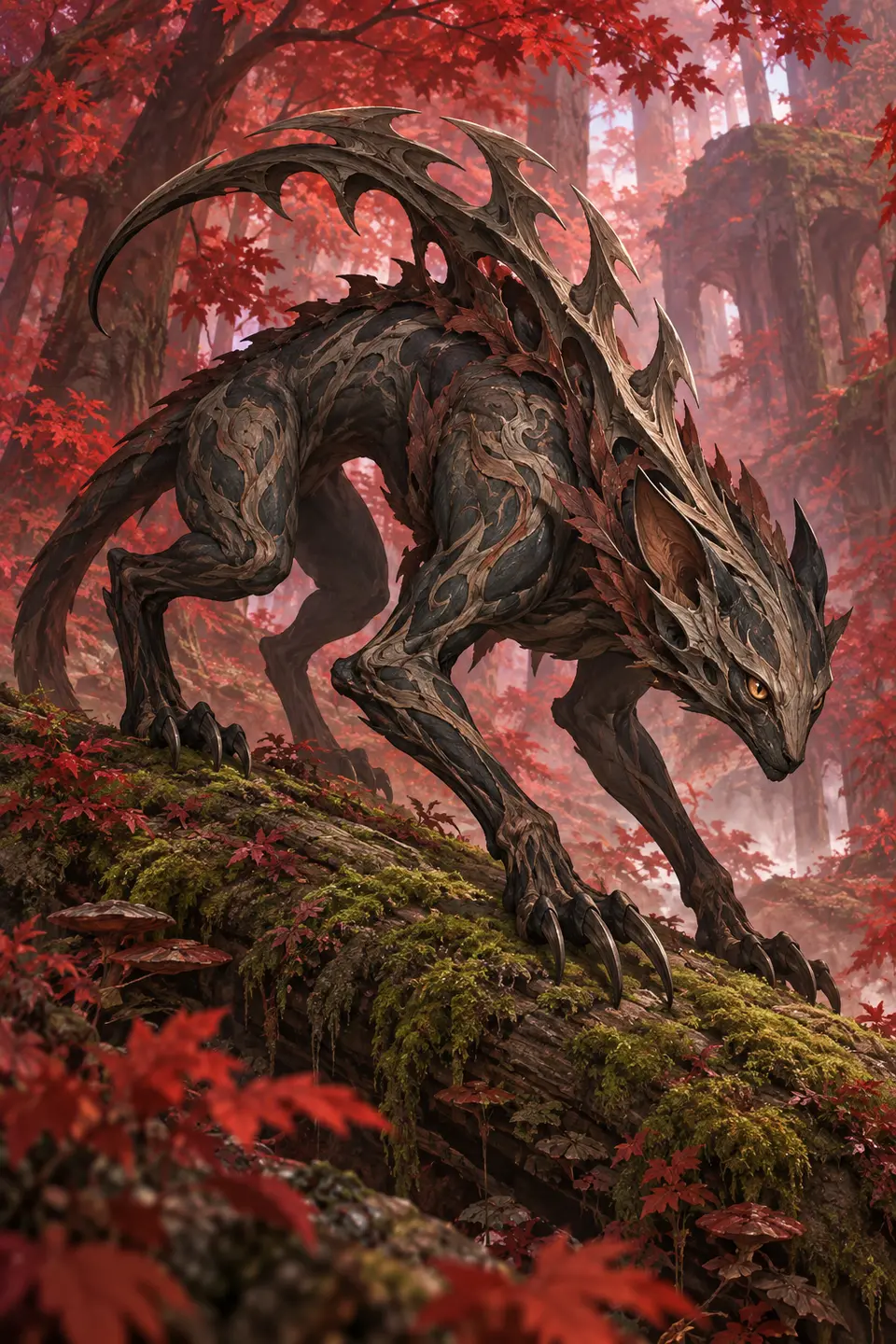
A Redwild dungeon-origin Flesh-family monster under the current classification system.
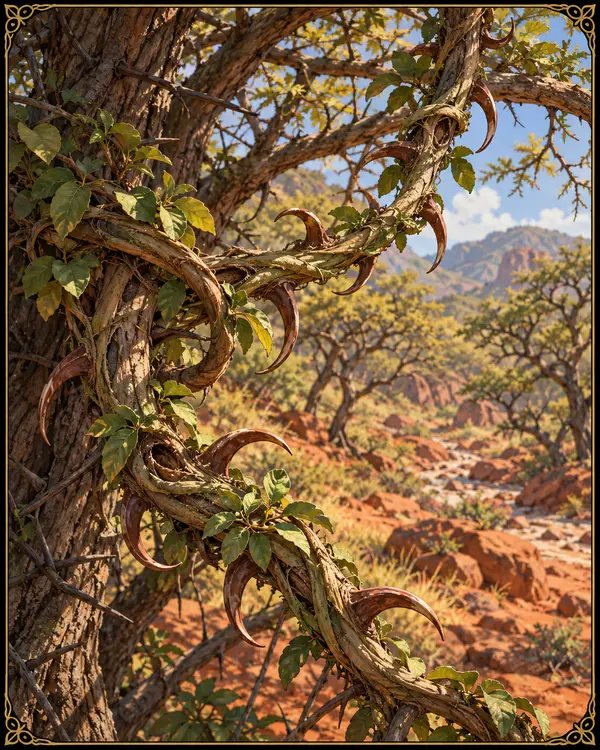
Flora of Thornbreak Woodlands. Barbed climbing vine; offers insect/small-animal shelter.
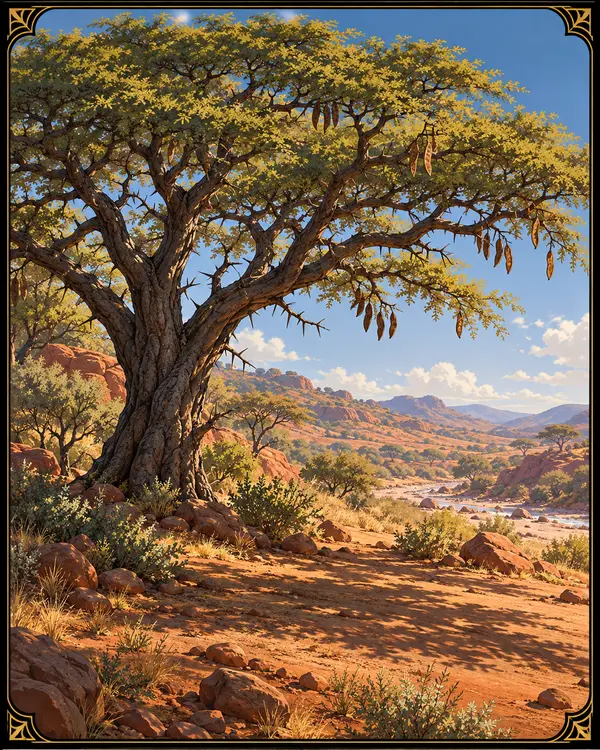
Flora of Thornbreak Woodlands. Thorny drought-tolerant tree; seed pods and shelter; cutting it affects grazing routes.
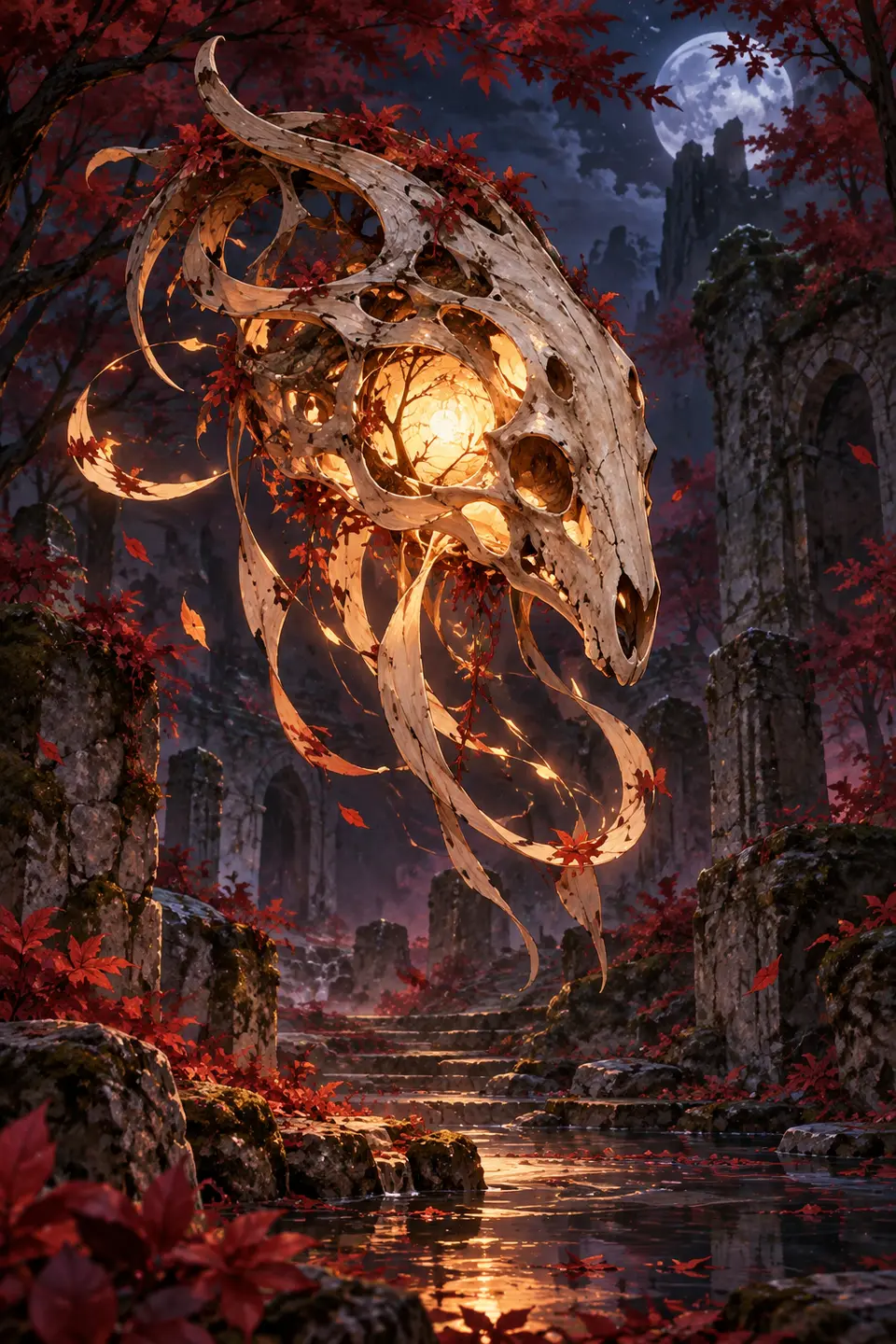
A Redwild dungeon-origin Resonance-family monster under the current classification system.

Open seasonal grassland feeding migration; fire cycles and herbivore/predator routes; forage availability depends on rain.
seasonal settlement in Redwild: hide curing, herd guides, tents, trading fires and scouts.
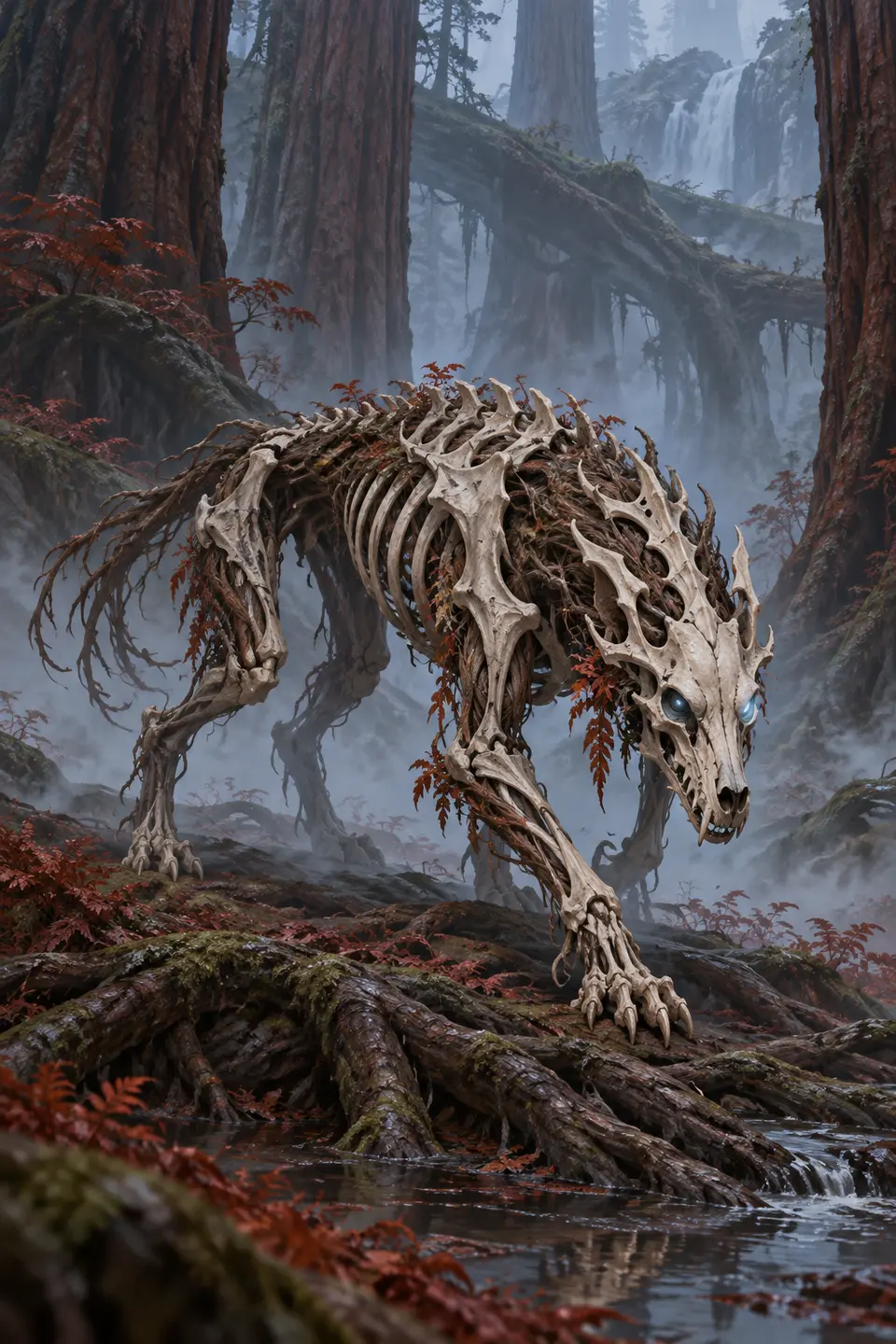
A Redwild dungeon-origin Bone-family monster under the current classification system.
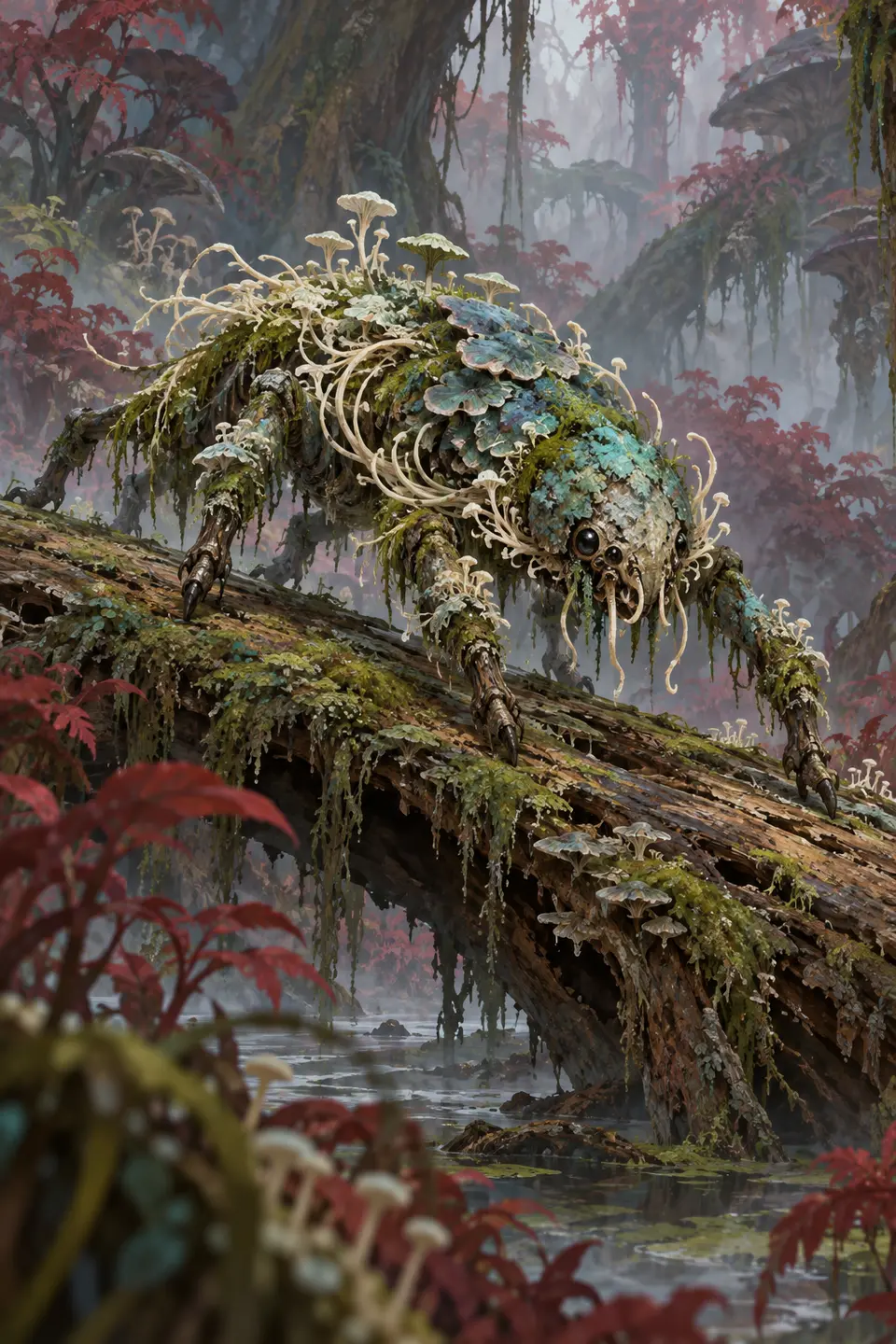
A Redwild dungeon-origin Spore-Grave-family monster under the current classification system.
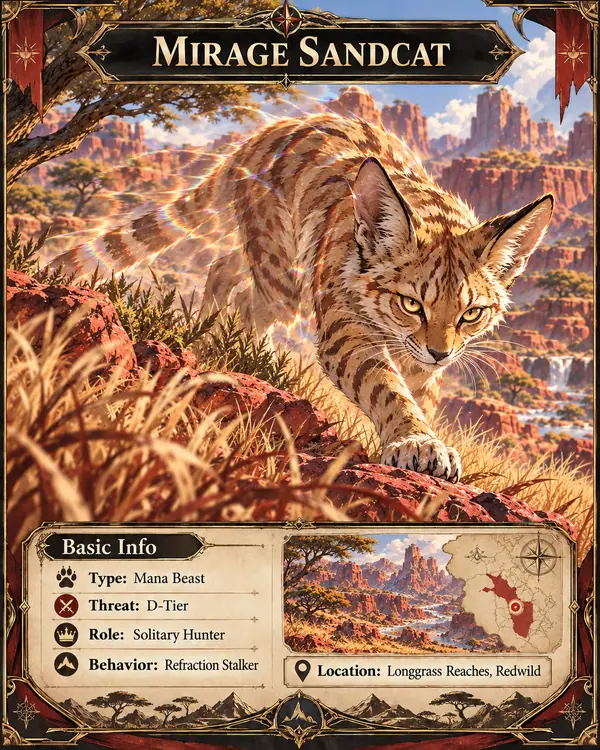
Mana Beast of Longgrass Reaches. Light-bending concealment assists ambush; small prey specialist.
A loose settlement around several linked water sources, famous for animal knowledge, pathfinders, couriers, and long-distance runners.
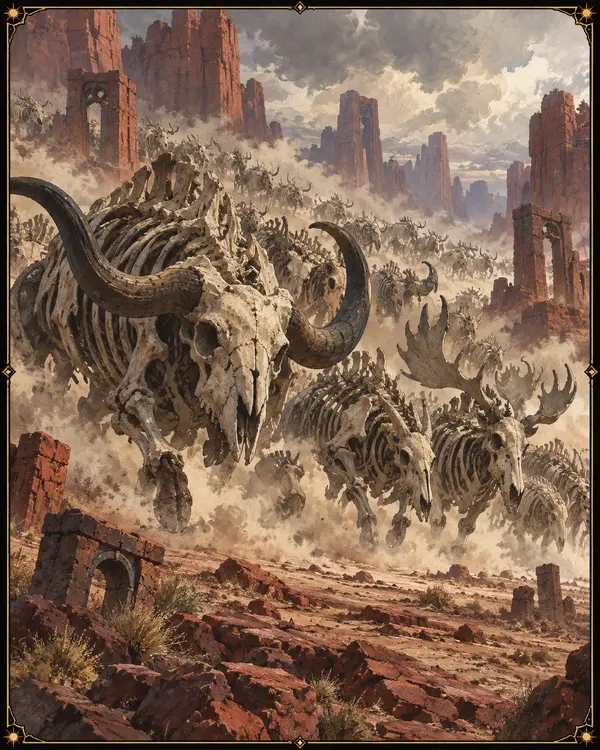
Dungeon Monster of Hollow Scars. Dungeon-driven coordinated formation of skeletal herd remains.
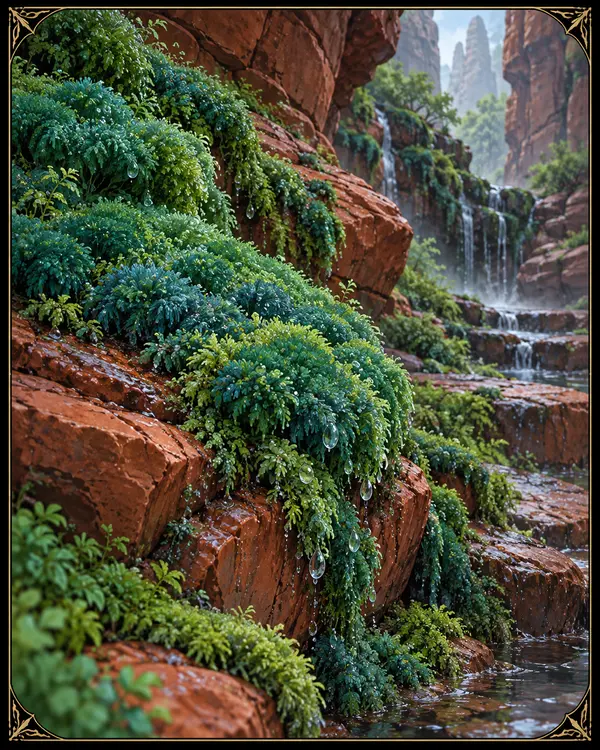
Flora of Riven Steps; Springholds. Moisture-responsive moss whose swelling and coloration indicate humid conditions.
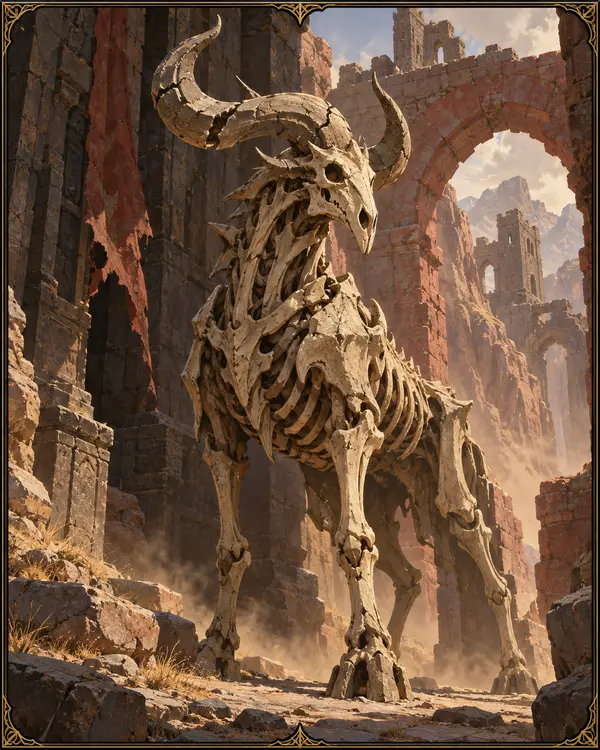
Dungeon Monster of Hollow Scars. Reanimated horned skeletal guardian; guards fixed territory.
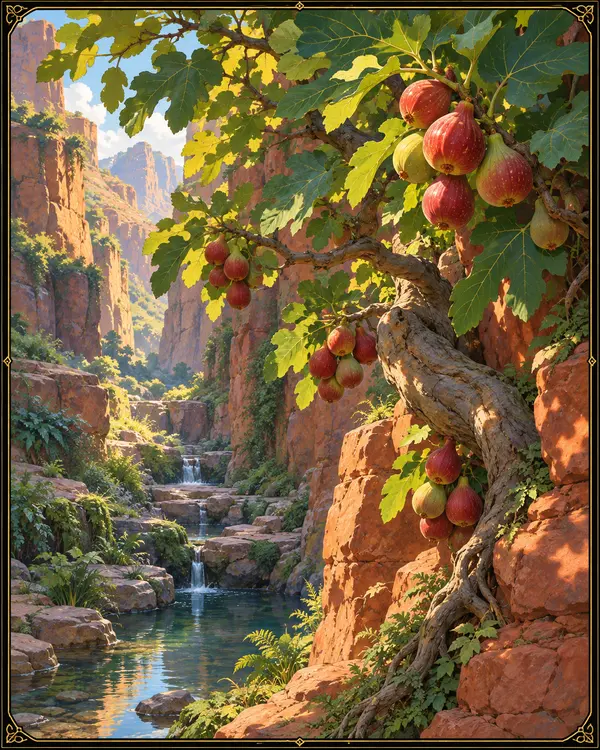
Flora of Springholds; Riven Steps. Fruiting canyon plant; feeds wildlife and travelers seasonally.
caravan trade town in Redwild: mixed caravan yards, grain imports, stock checks and water accounting.
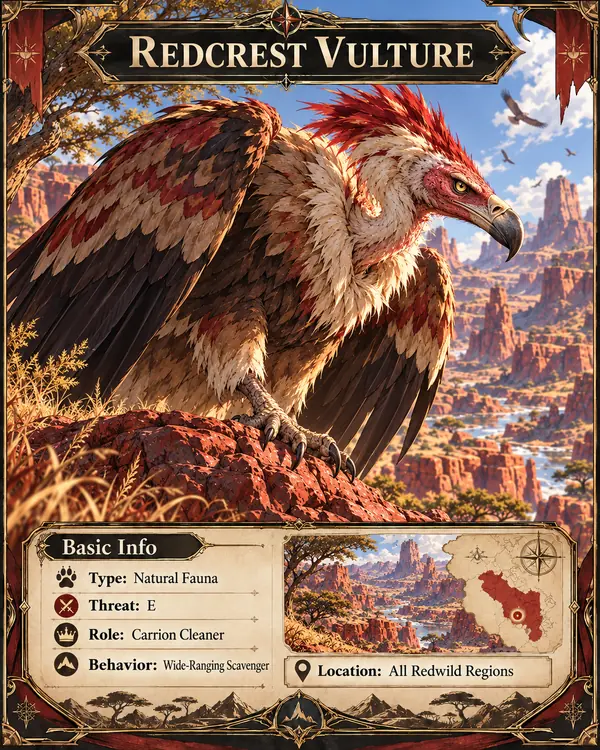
Natural Fauna of All Redwild habitats. Wide-ranging scavenger; essential carcass processing.
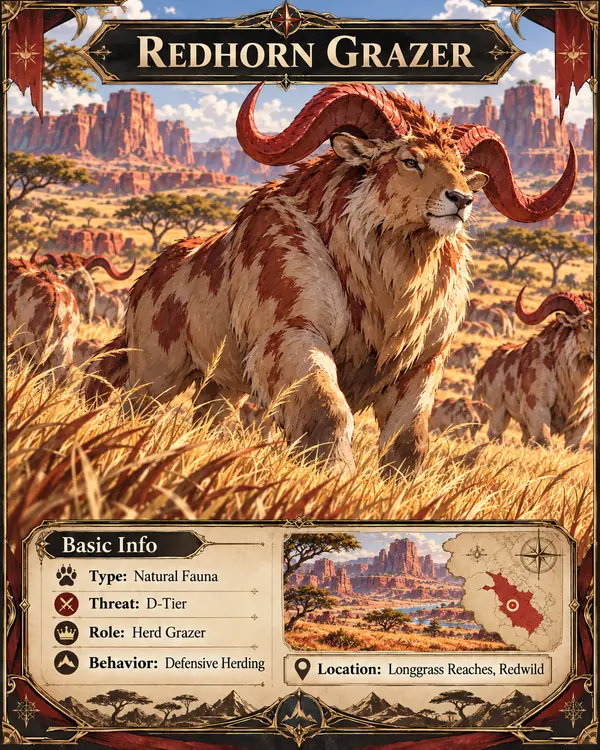
Natural Fauna of Longgrass Reaches. Defensive herding; sweeping horns; calves protected inside herd.
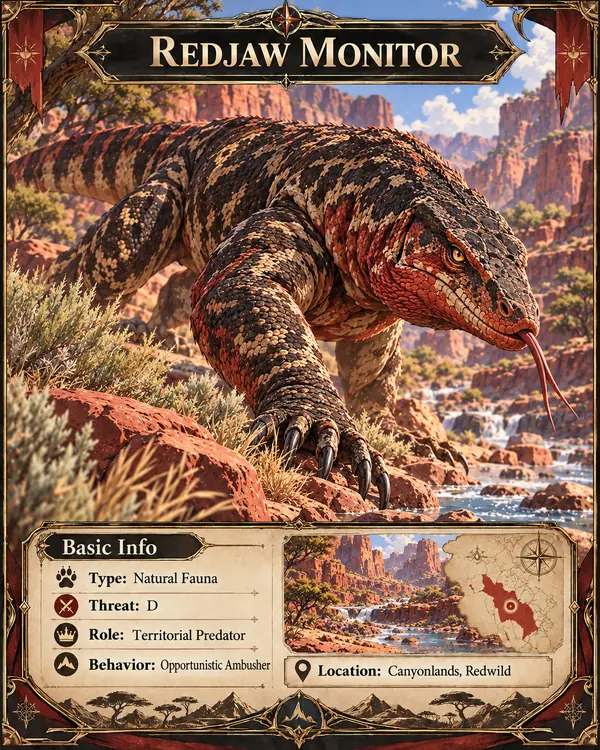
Natural Fauna of Canyonlands; Springholds. Egg and carrion scavenging; opportunistic ambush, territorial near waterways.
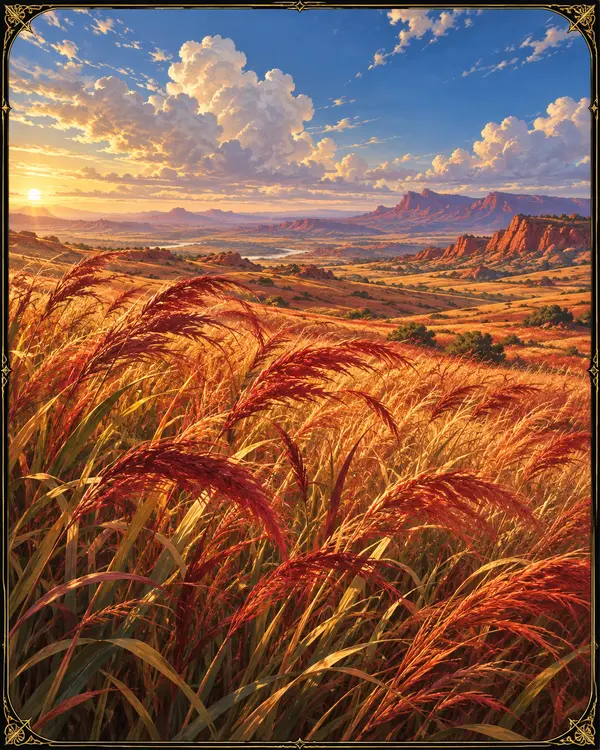
Flora of Longgrass Reaches. Dominant seasonal grazing grass; tall concealment; dry seed-stage growth is flammable.
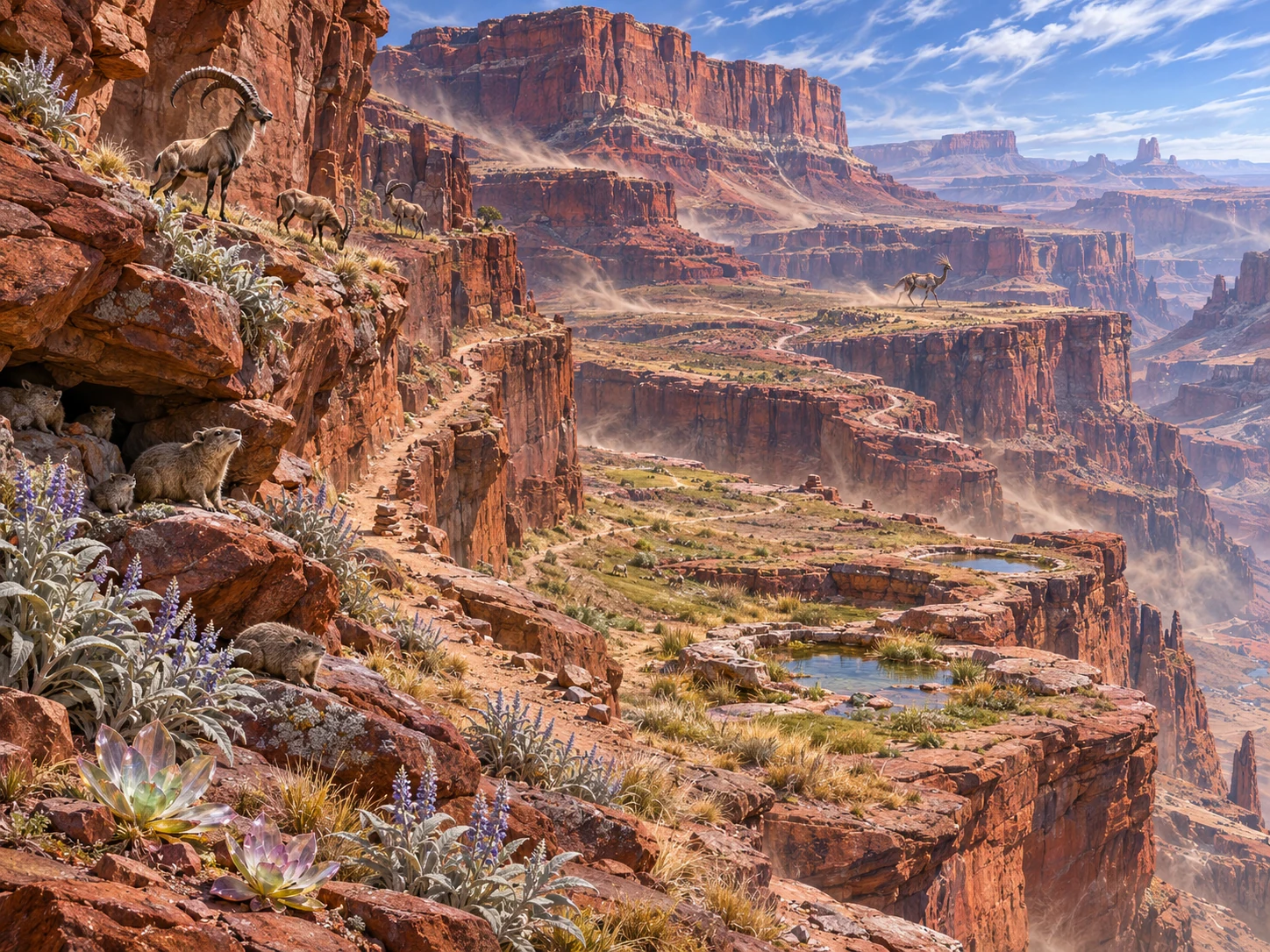
Wind-exposed red rock plateaus and high cliffs, burrows, hardy grazing patches, rare stone basins; cliff and mesa traversals.
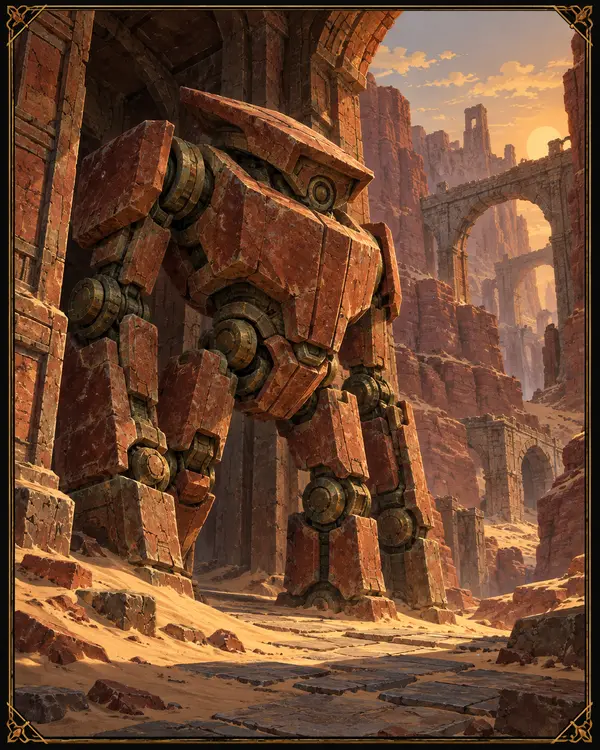
Dungeon Monster of Ancient dungeon passages; Hollow Scars. Stone-and-artifice guardian dormant or patrolling ancient routes.
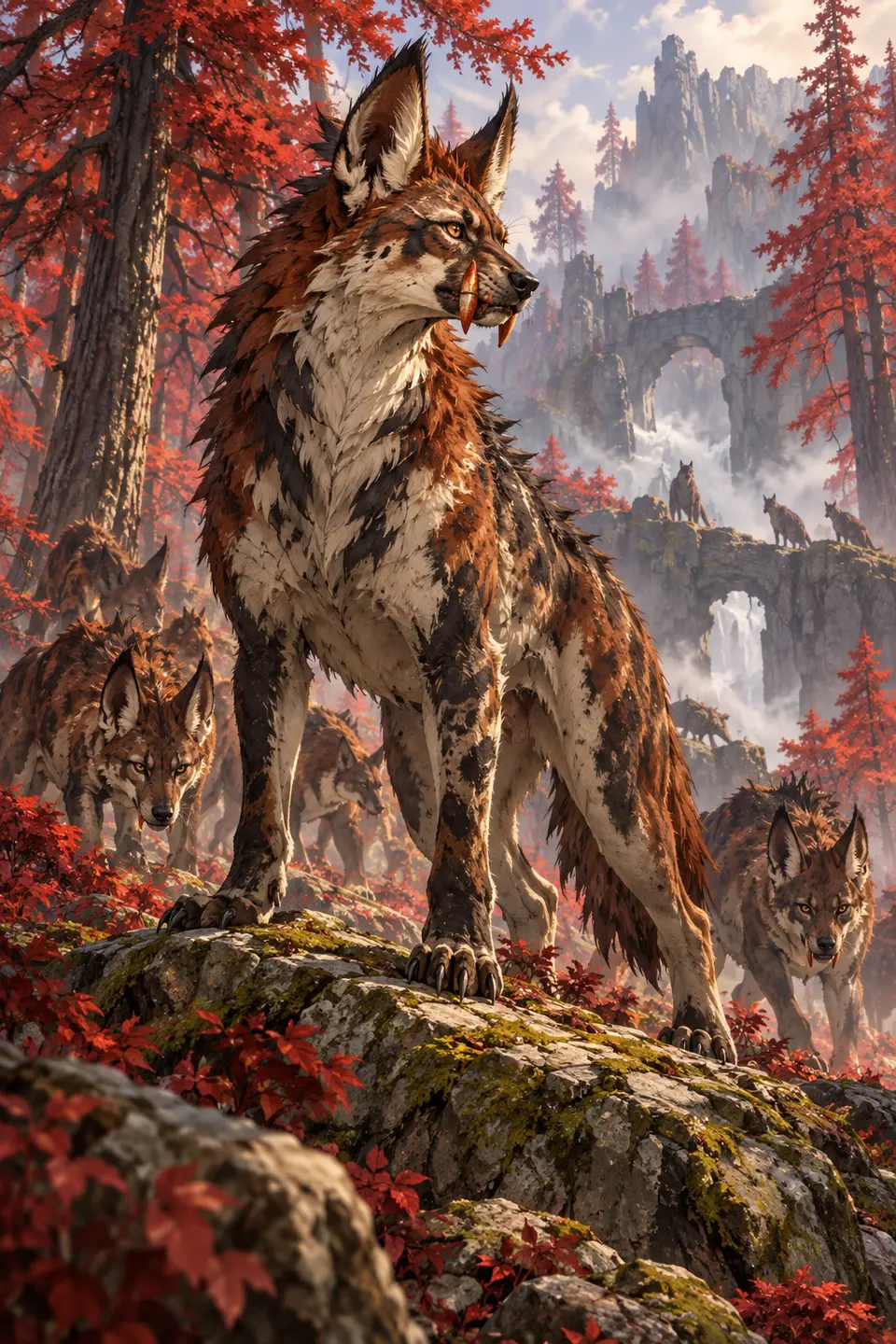
A Redwild dungeon-origin Flesh-family monster under the current classification system.
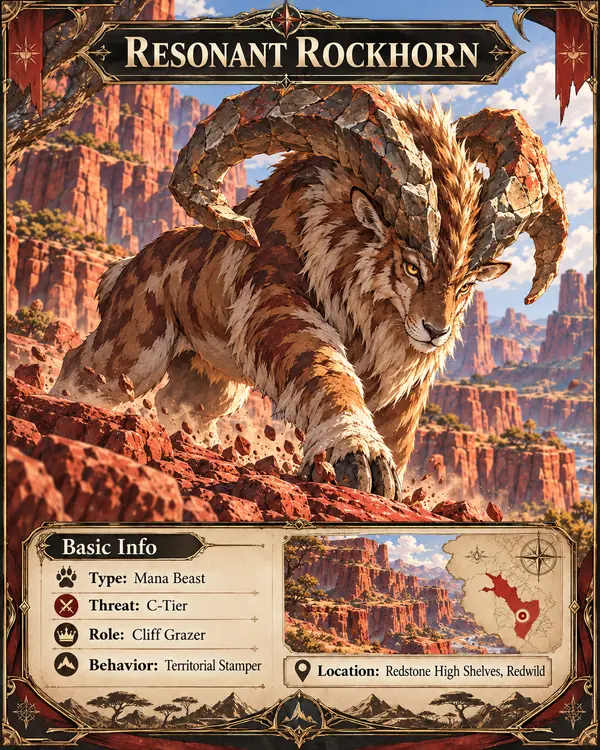
Mana Beast of Redstone High Shelves. Uses seismic horn taps as territorial communication.
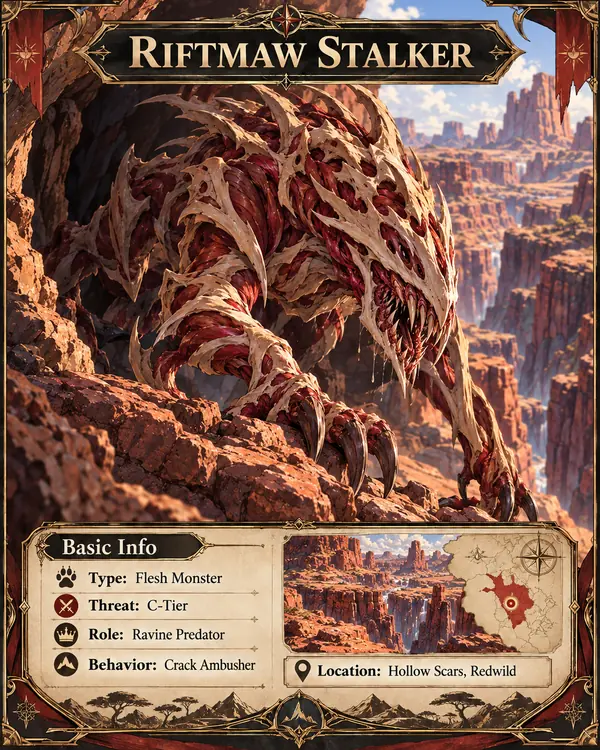
Dungeon Monster of Hollow Scars; Riven Steps. Crawling ravine predator; attacks from cracks and broken stone.
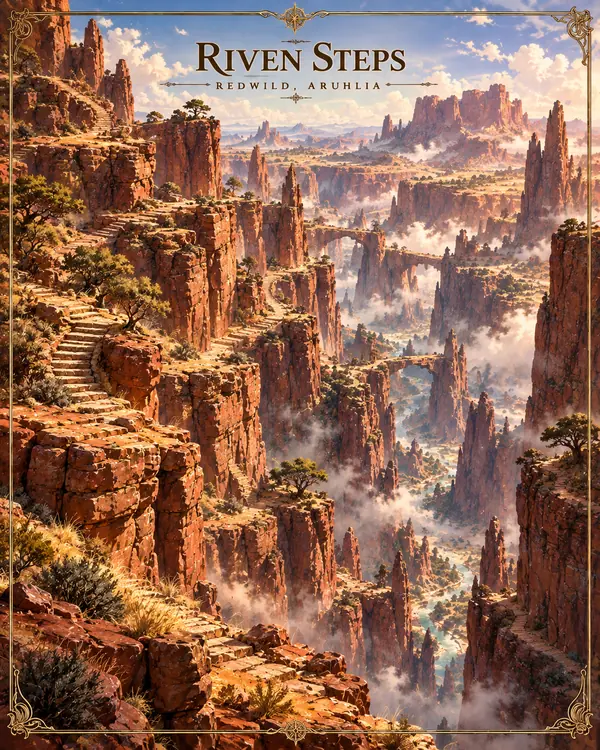
Tiered ravines, canyons, cliffs, caves and seasonal flood corridors; major ambush and flash-flood hazards.
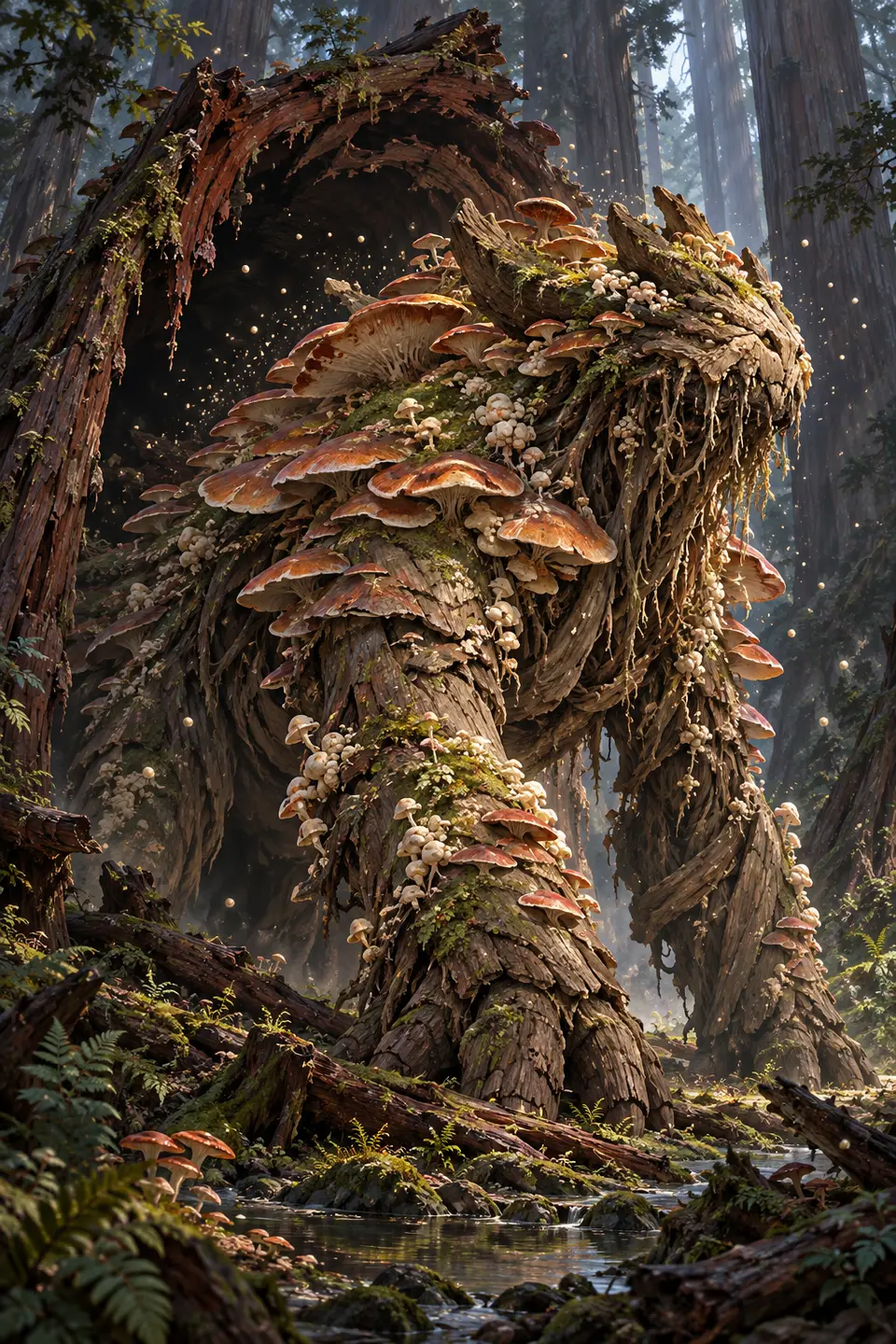
A Redwild dungeon-origin Spore-Grave-family monster under the current classification system.
spring village in Redwild: fruit groves, spring maintenance, stone basins and seasonal livestock.
salt town in Golden Sea (mapped eastern lands): salt pans, covered caravan yards, pottery and water transport.
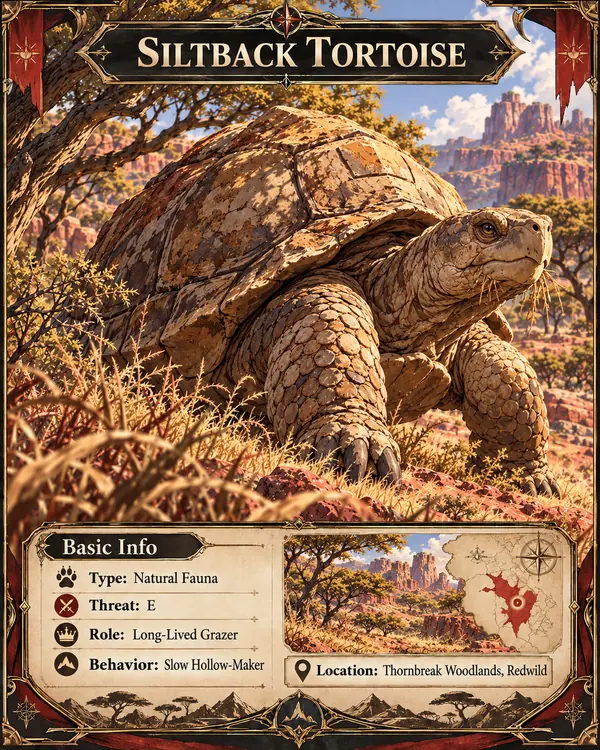
Natural Fauna of Thornbreak Woodlands. Slow browsing; makes shallow refuges that other species reuse.
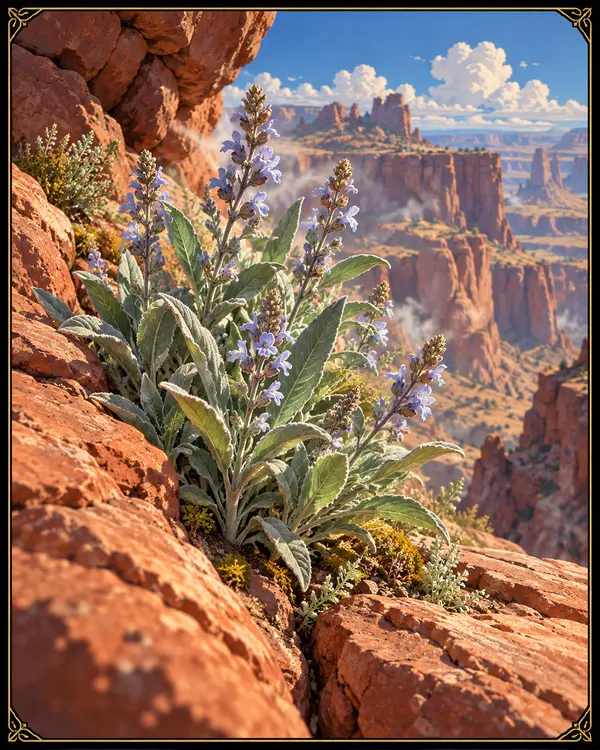
Flora of Redstone High Shelves. Aromatic crack-growing herb, traditionally used in steam preparations; not a guaranteed cure.
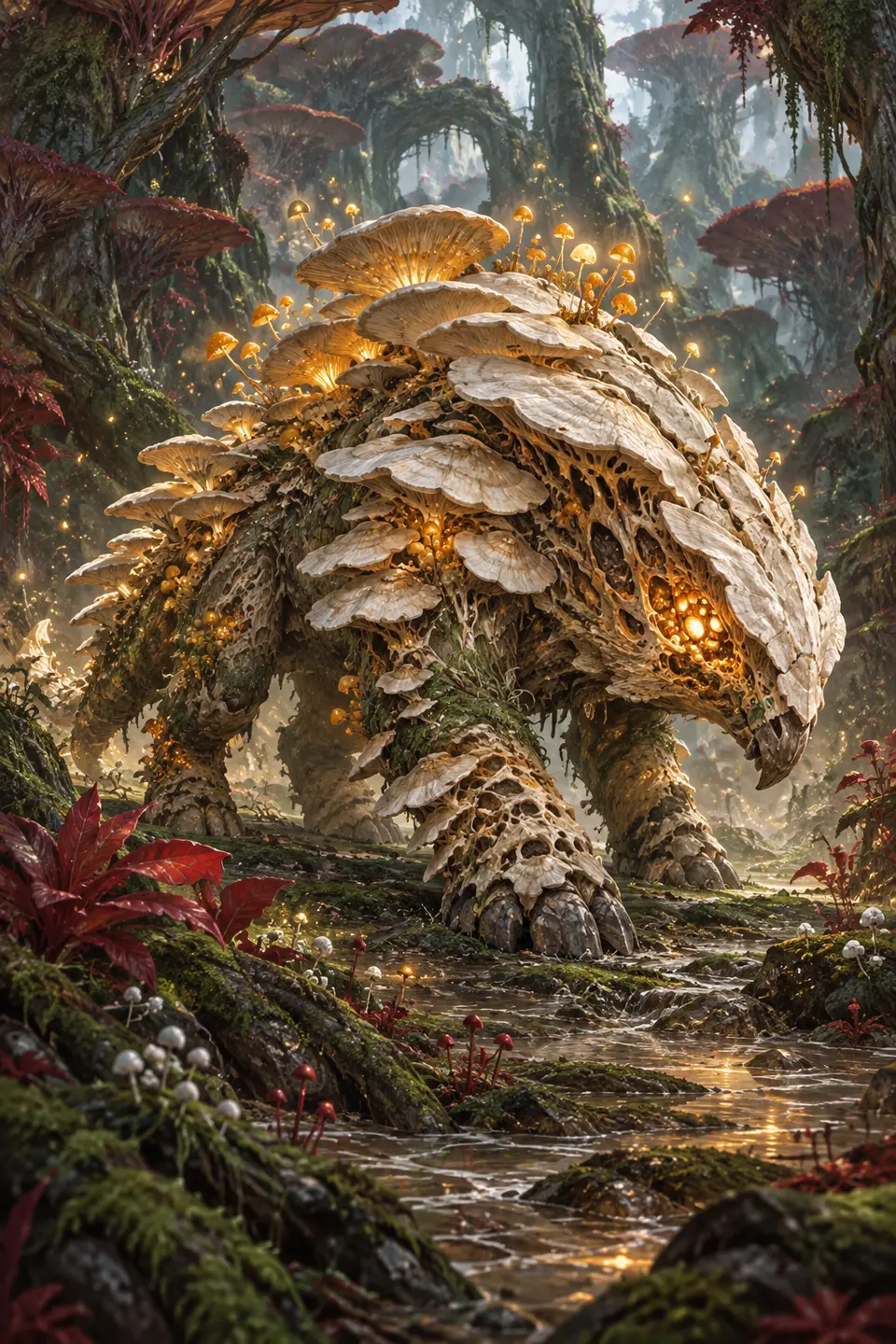
A Redwild dungeon-origin Spore-Grave-family monster under the current classification system.
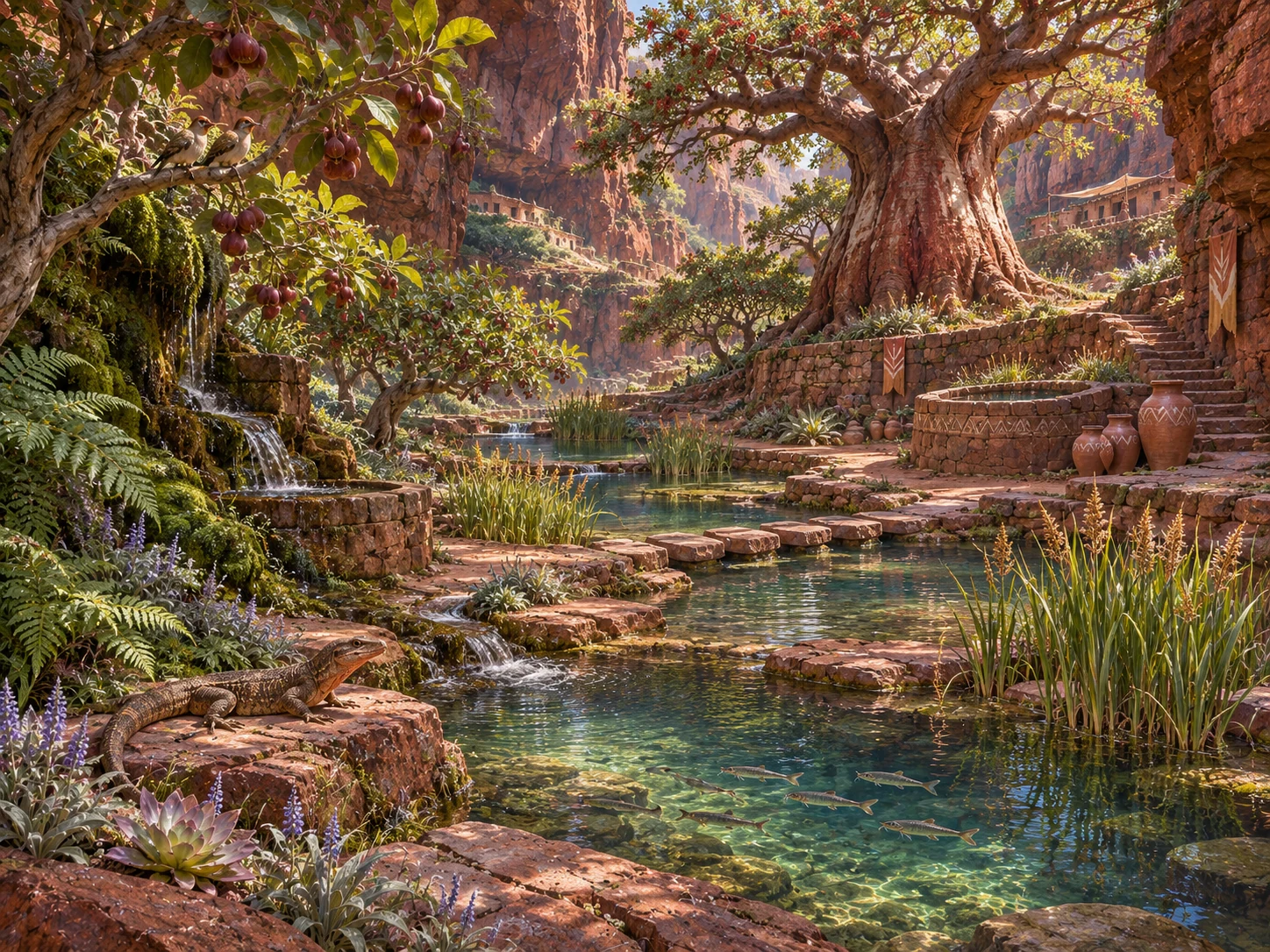
Permanent spring pools, shaded gorge oases, emergent reeds, fruit trees, fish and settlement water politics.
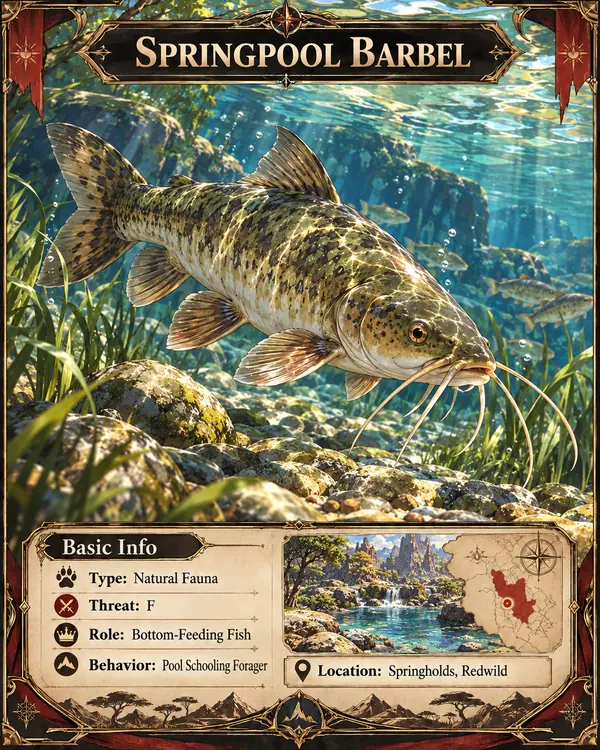
Natural Fauna of Springholds. Pool fish; feeds on aquatic debris/invertebrates; supports aquatic food web.
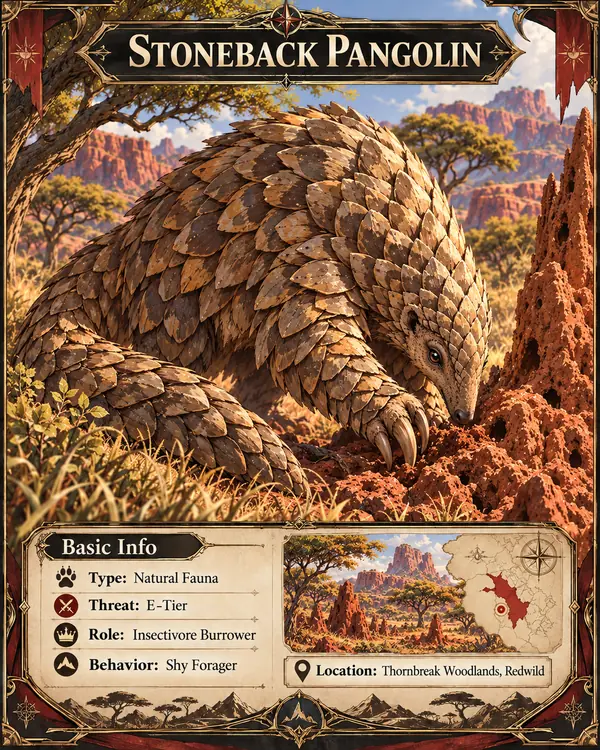
Natural Fauna of Thornbreak Woodlands. Shy termite digger; burrowing improves soil infiltration.
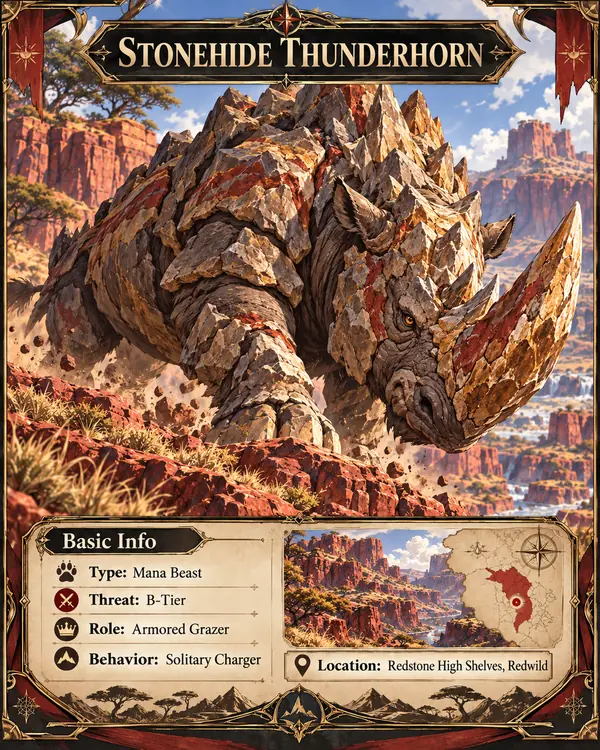
Mana Beast of Redstone High Shelves. Solitary; defensive earth-compressing charge; seeks wide grazing territories.
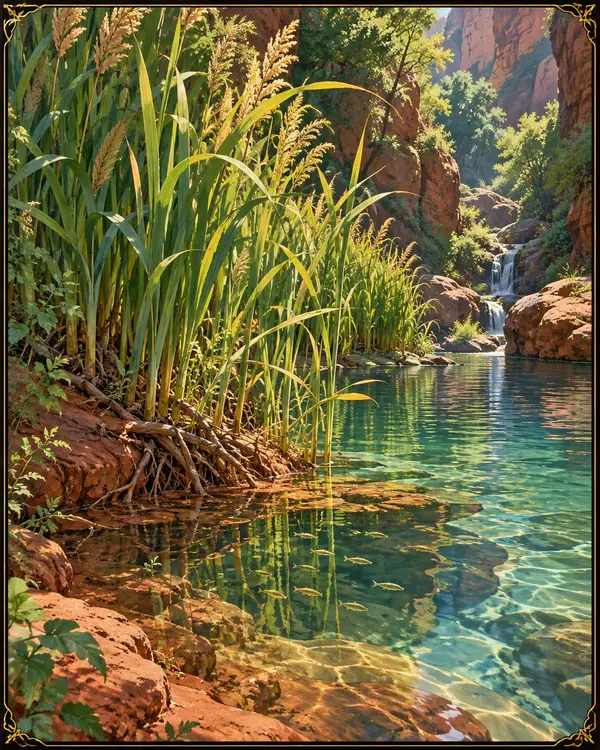
Flora of Springholds. Bankside reed; stabilizes pools, filters sediment, and shelters juveniles.
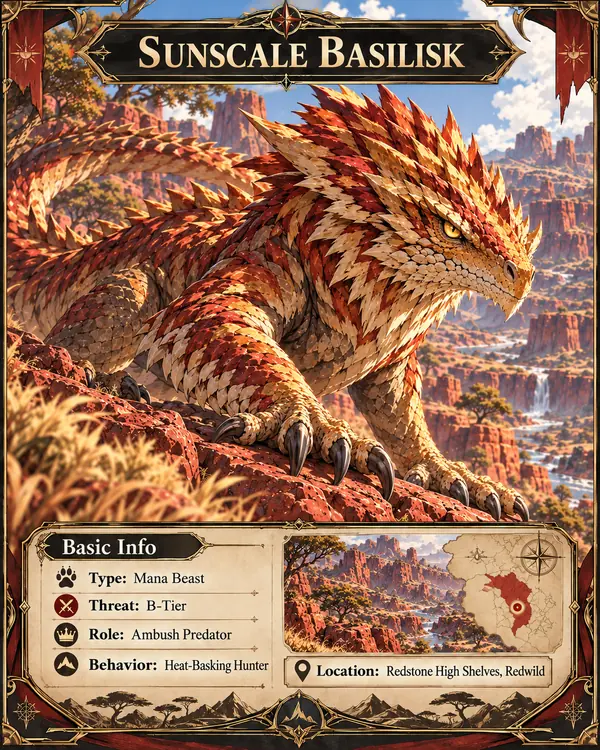
Mana Beast of Redstone High Shelves. Heat-adapted reptile; uses solar mana for thermoregulation.
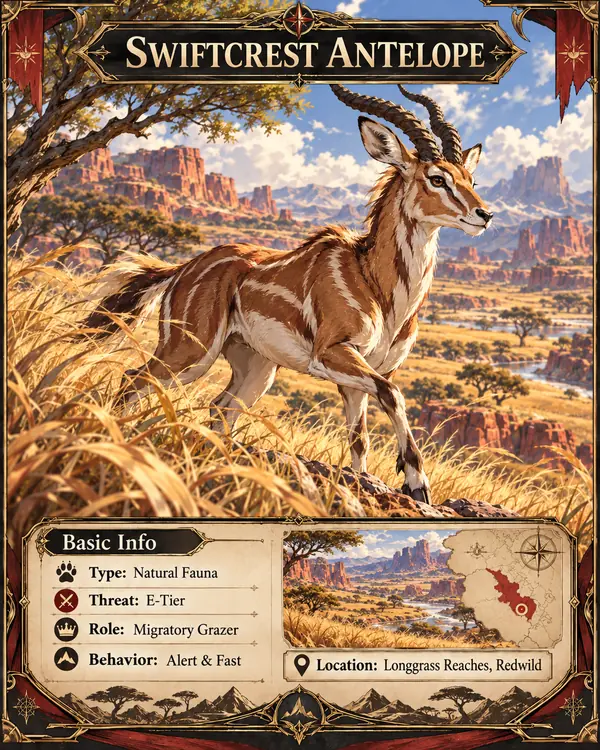
Natural Fauna of Longgrass Reaches. Fast, alert; alarm calls; seasonal long-distance movement.
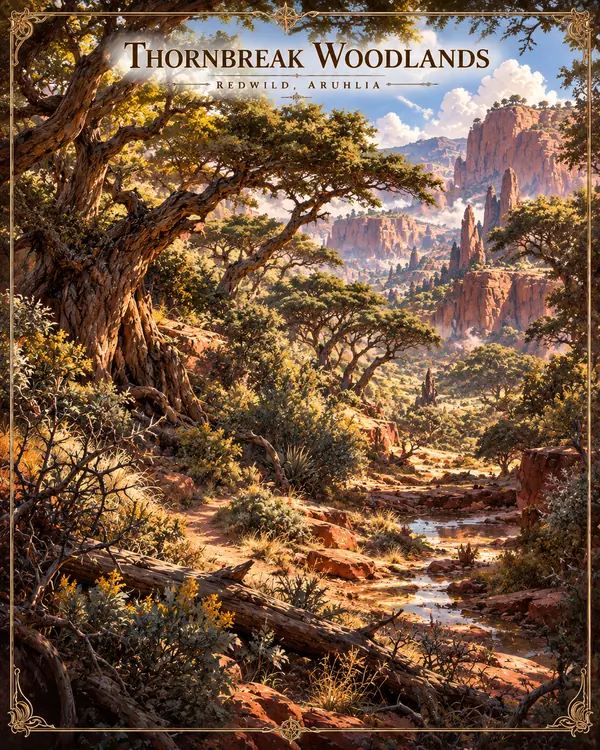
Dry thorn trees and scrub, seasonal streams, nesting sites, woodland refuge, Thornmaw habitat.
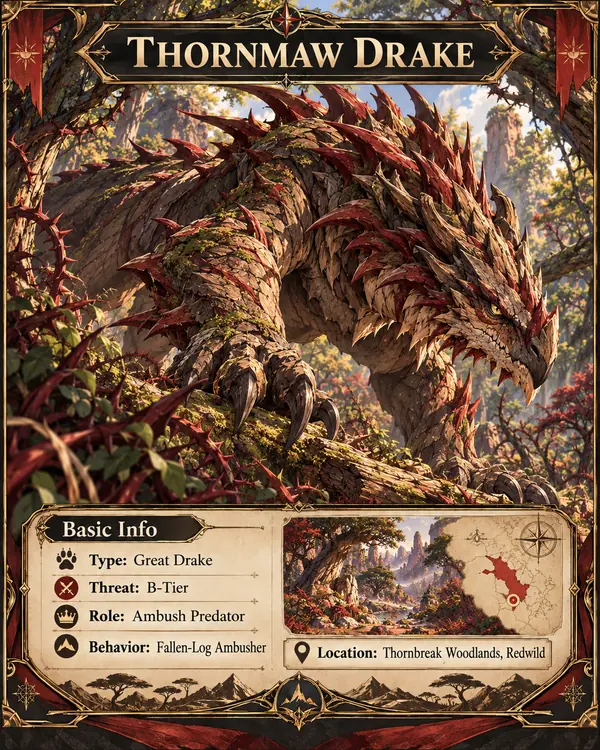
Bark-colored scales; hooked claws; backward-facing thorns; fallen-log close-quarters hunting.
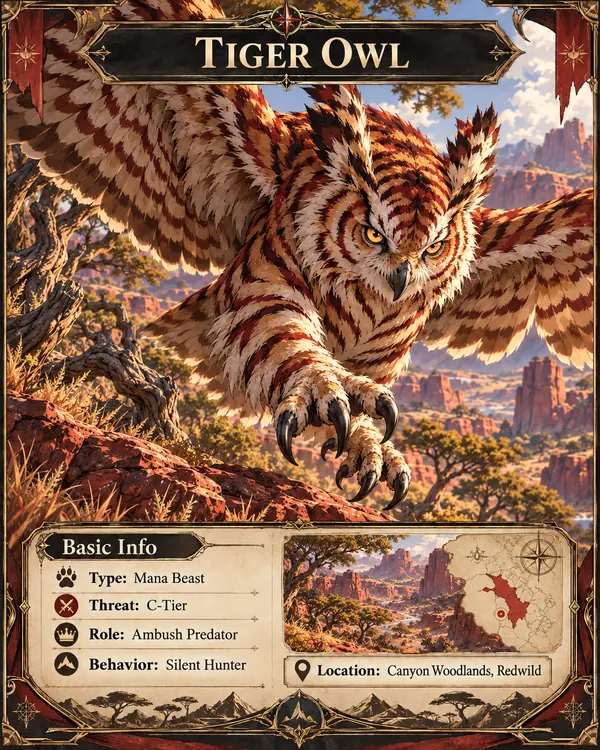
Mana Beast of Canyon Woodlands; Riven Steps. Tiger-bodied silent ambush predator; follow definitive 2026-09-30 anatomy and abilities.
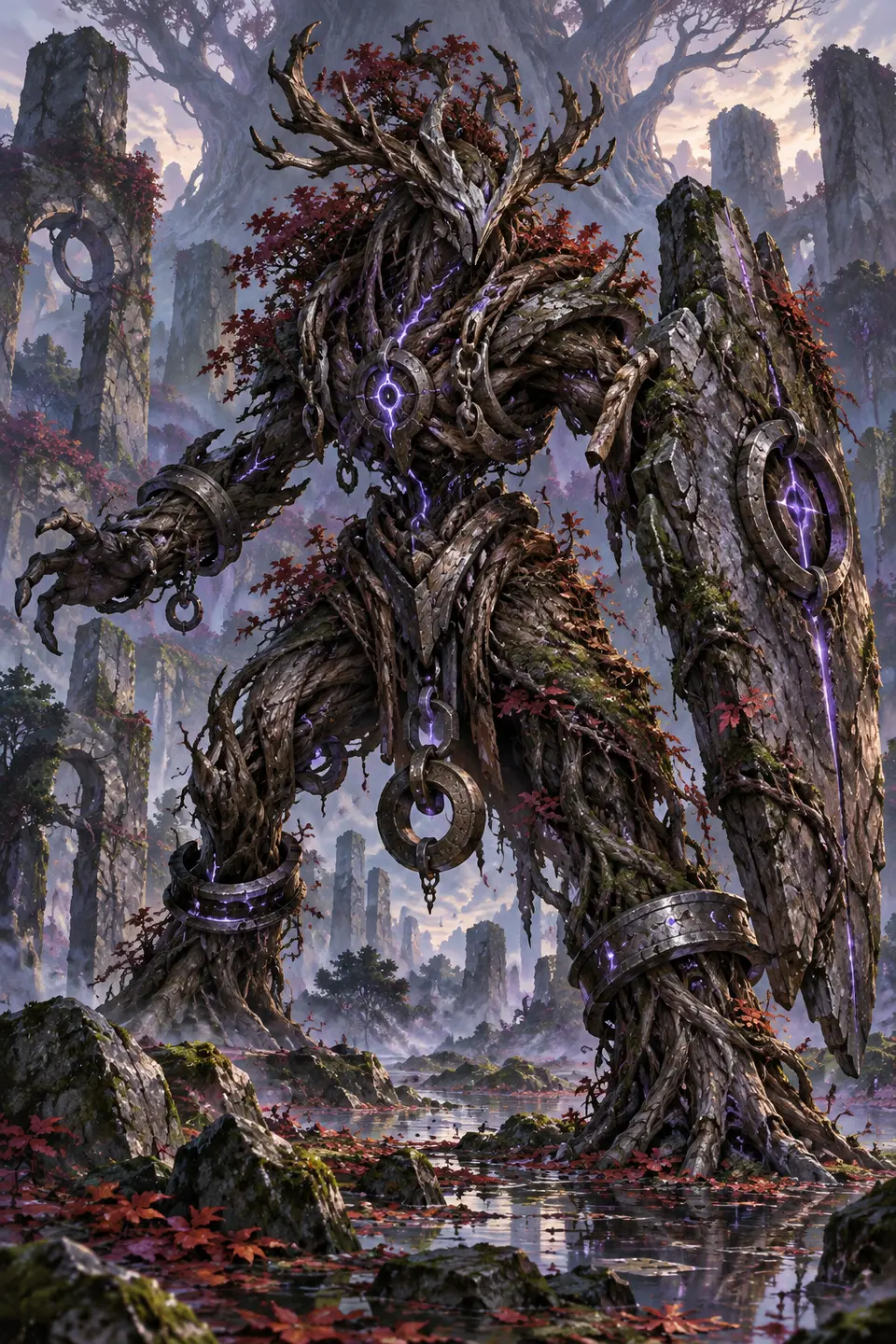
A Redwild dungeon-origin Resonance-family monster under the current classification system.
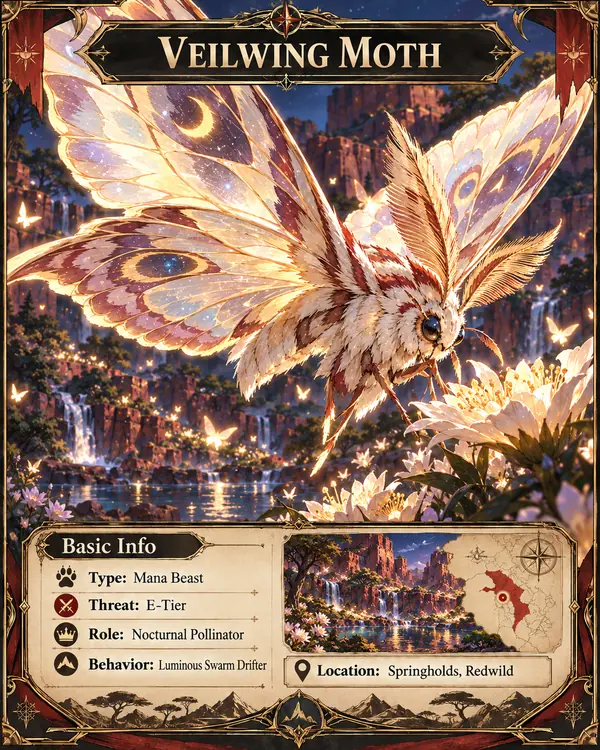
Mana Beast of Springholds; Thornbreak Woodlands. Diffuses light at wings to deter attack; pollinates nocturnal flowers.
A participatory public culture of club identity, Glassline viewing, tactics, rituals, making, debate and travel that grows denser in major cities.
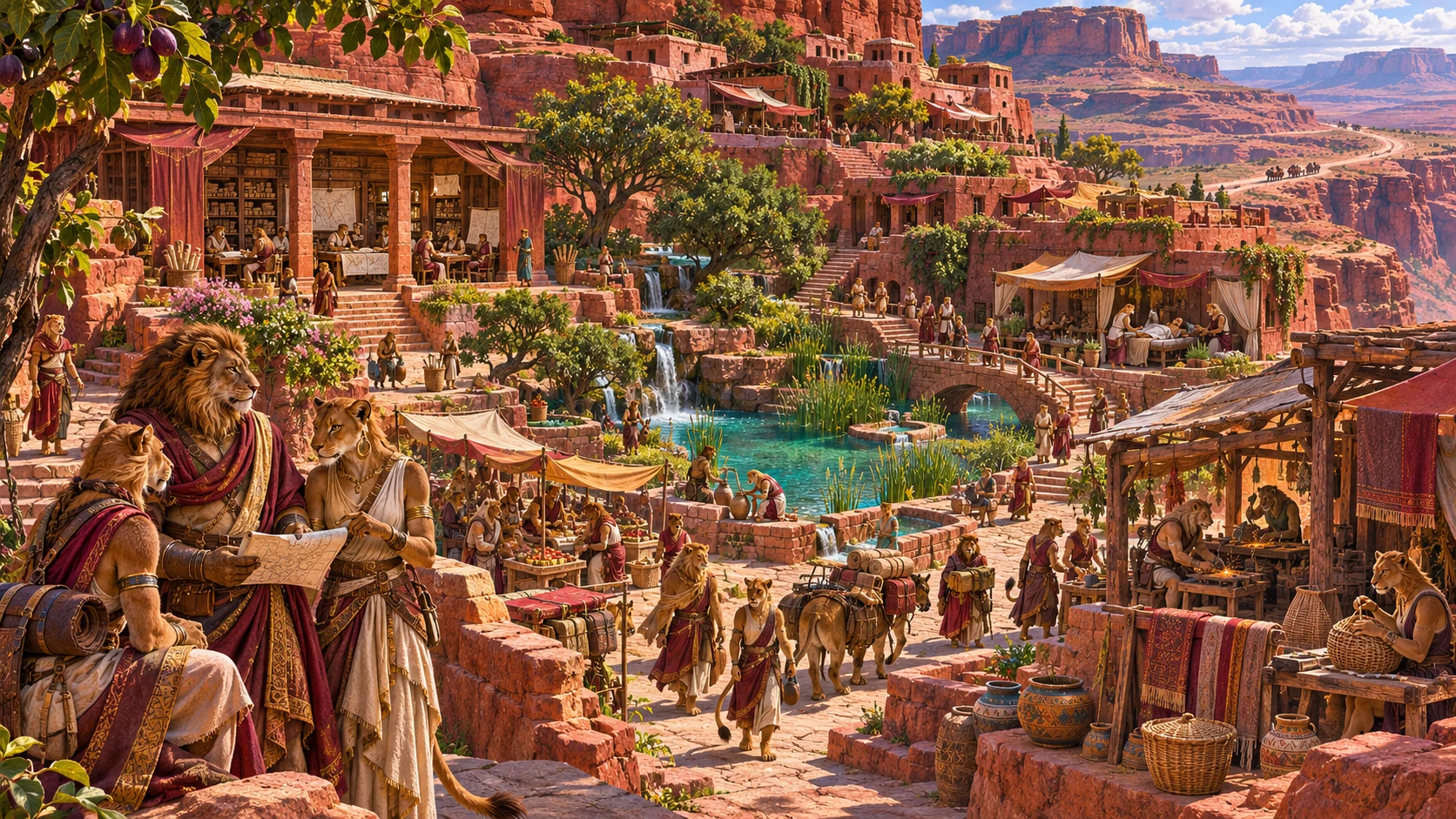
The largest permanent Felionus settlement, centered on a reliable canyon spring and ancient redstone terraces.
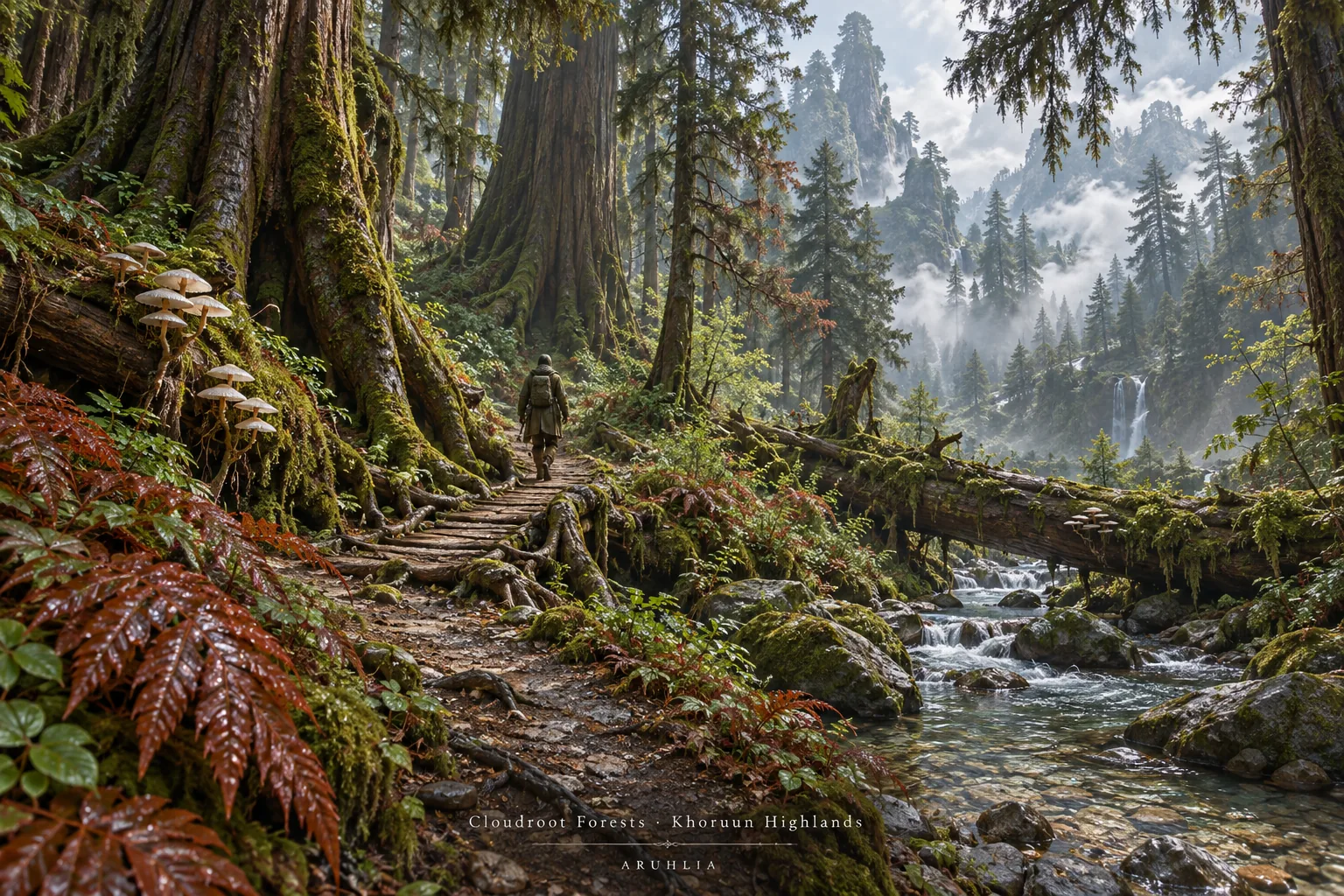
A northwestern highland ecology of mistcliffs, wet forests, grazes, stone peaks, and a populated river basin.

A Felionus C-rank, Level 1 Vanguard DPS and Black Mane of the Long Road.
Concordia Crownseat supporters are said to be arguing over how cross-dungeon guardian waves should be compared on a scorecard.
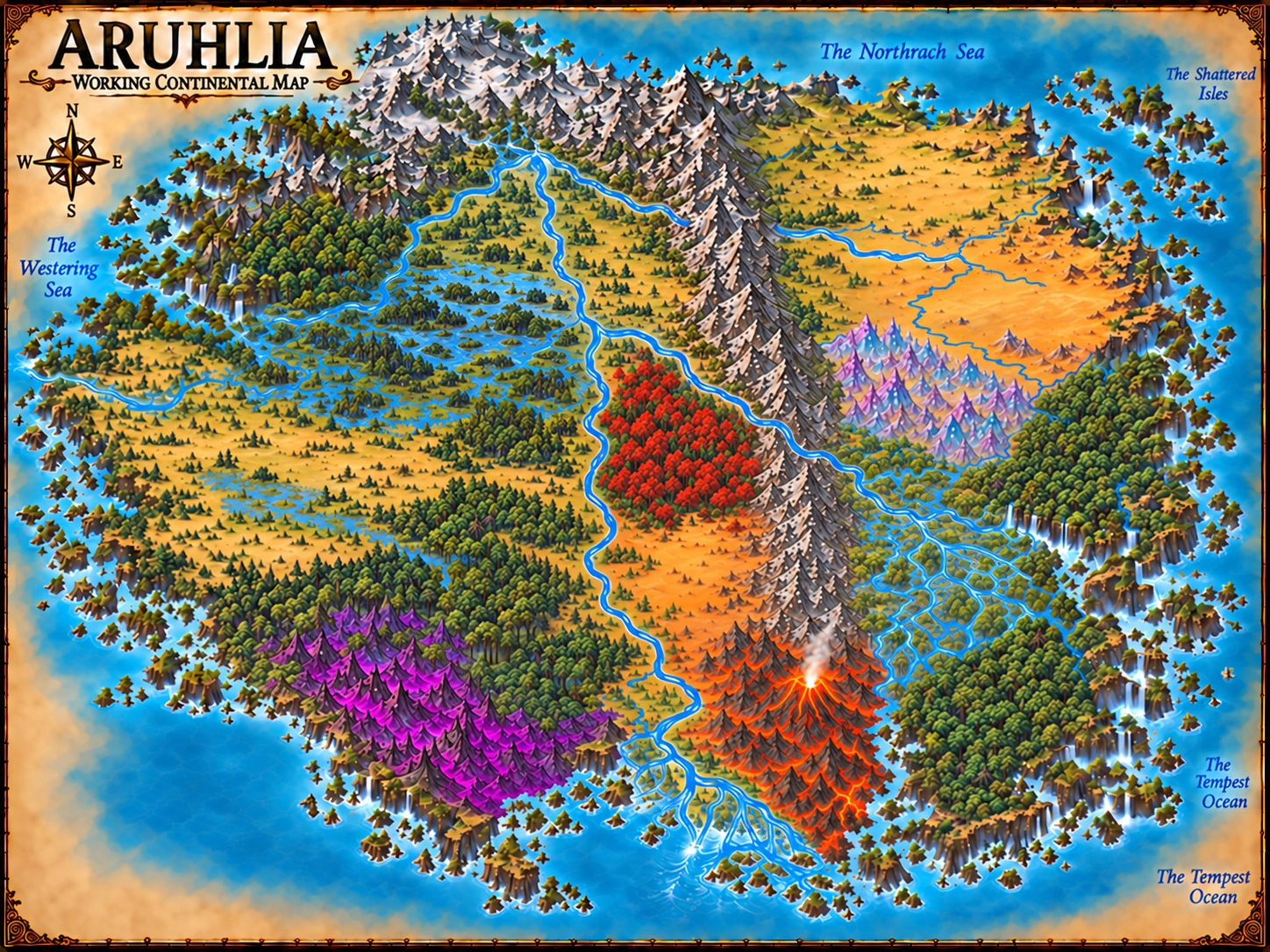
The continent containing the Heartlands, Wolfhaven, Stormspine, Khoruun Highlands, Western Marches, Blackfen, Redwild, Ember Plains, and Vareth’s full eastern region chain.