
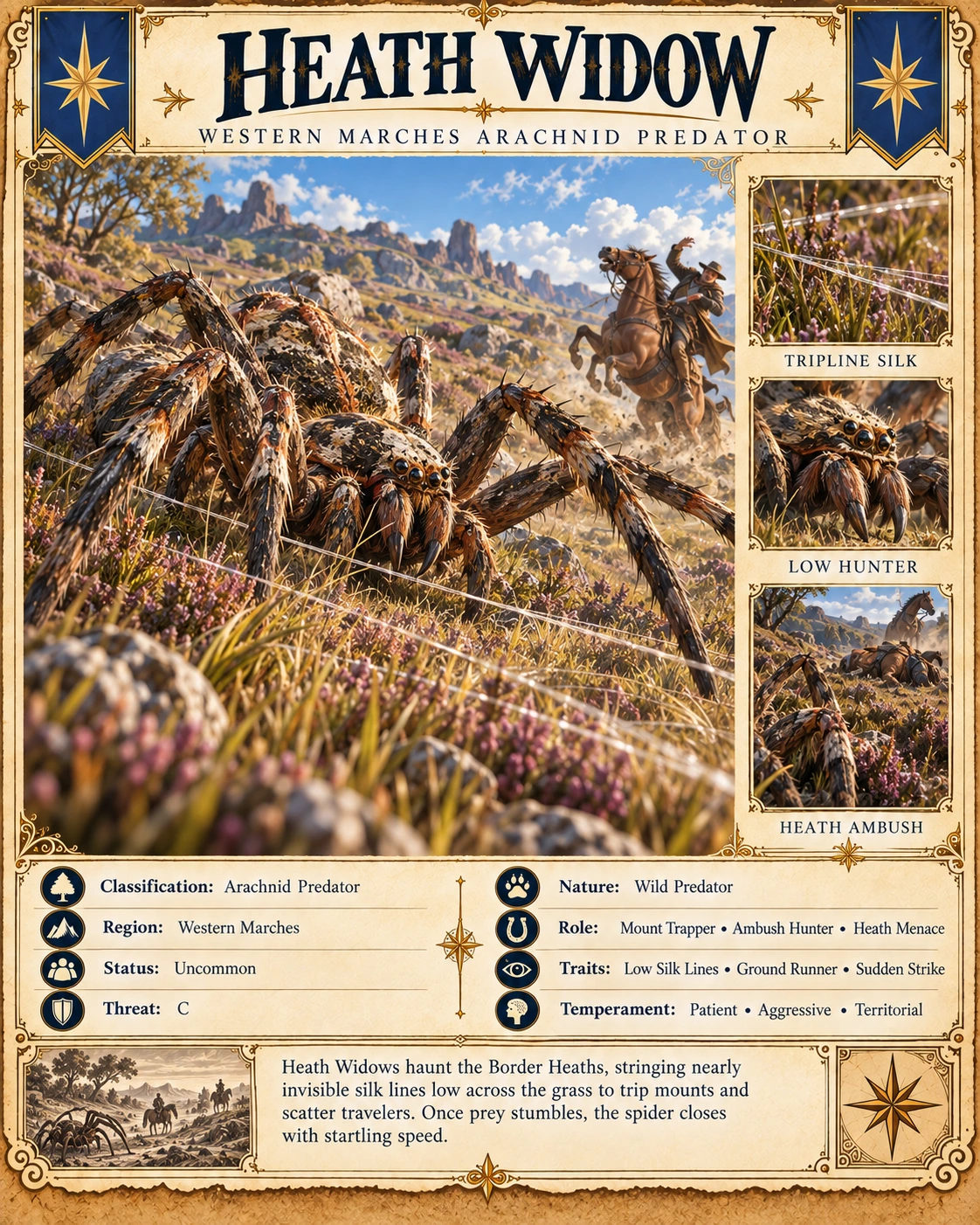
Heath Widow
Huge ground-running spider using low silk trip-lines through grass.
Encounter Threat C-class level threat
Huge ground-running spider using low silk trip-lines through grass.
Common Loot and reagents - Tripline Silk — Strong elastic silk; snares, climbing line, armor stitching, surgical thread, bow components, wagon rigging. - Widow Venom — Paralytic venom; antidotes, controlled anesthetics, research reagents, regulated poison use. - Spinneret Gland — Intact fiber-production organ; alchemical/artificer research and magically reinforced textiles.
Wild or unbound members of this lineage are lethally hostile to people on meaningful detection. Established bonded, domesticated, Companioner-trained or canonically socialized individuals are exceptions. Ecology and intelligence do not erase the wild baseline.
Tracking Info
Low silk lines appear shin- to mount-knee-high through heather and grass, often almost invisible except for dew. Trip-lines converge toward shallow ground hollows rather than overhead webs. Drained prey may be dragged a short distance but is rarely wrapped into hanging bundles.
Deeper Ethology
Heath Widows hunt by disrupting movement. They place low silk across habitual animal paths, wait off-angle, and rush only after prey trips or slows. They prefer open heath with enough cover to conceal a ground sprint. Females defending egg chambers are much less tolerant than ordinary hunting adults. Repeatedly cut lines teach local spiders to move anchor points or place secondary strands behind the obvious first line. Wild, unbound Mana Beasts are lethally hostile to people upon meaningful detection. Ambush, flanking, pursuit and attack timing follow the species’ established senses and tactics. Early warning and staying beyond detection can prevent contact; once detected, survival requires force, earned deterrence, specialized established abilities or escape. Ordinary distraction or handling does not make the creature safe.
When This Is Wrong
A break from these patterns is a reason to investigate. Injury, hunger, breeding, severe weather, migration, displacement, disease, mana instability or learned responses to people can change behavior. Observe the context before deciding what the sign means.
Connected world
Follow the relationships
Each connection opens the matching canonical record or a focused Codex search when that subject does not yet have its own public record.
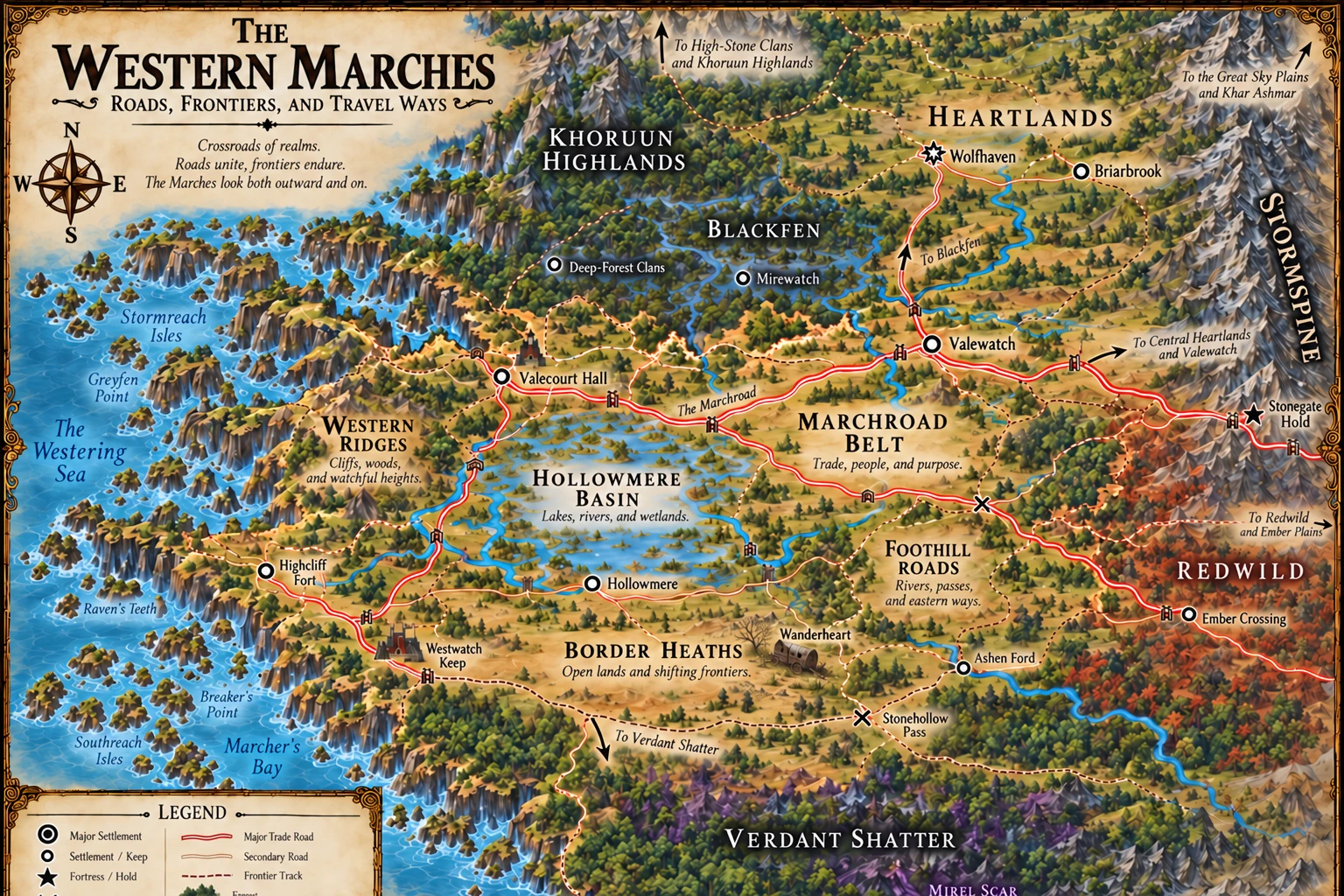 Heartlands subregion
Western Marches
The Heartlands’ western road-and-rider frontier: green-gold heaths, wooded ridges, living wagons, fortified crossings and service houses.
Open record →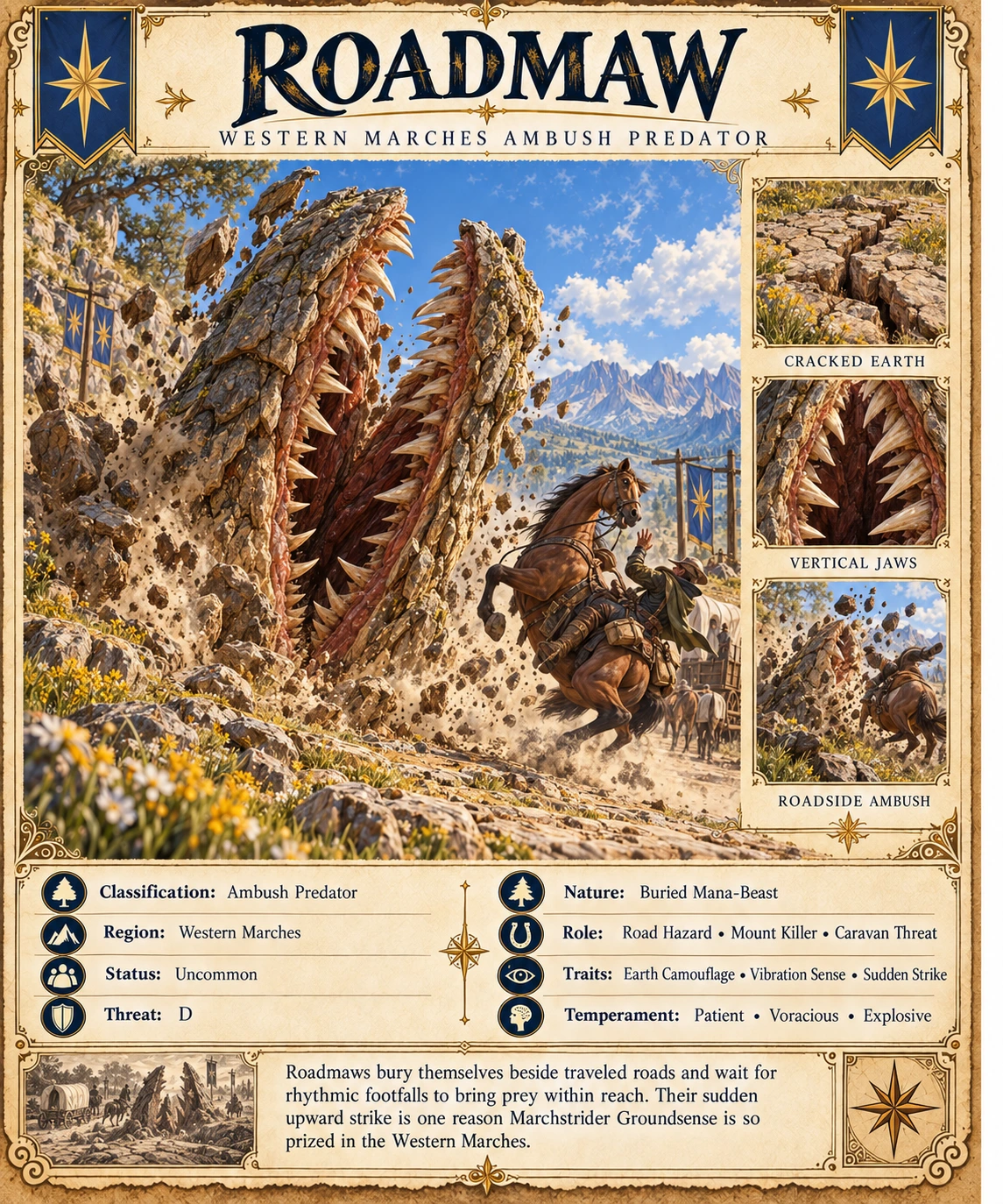 World Rule
Mana Beasts
Natural creatures with innate magical biology: an ecological classification, not a power tier.
Open record →